Wednesday, April 22, 2009

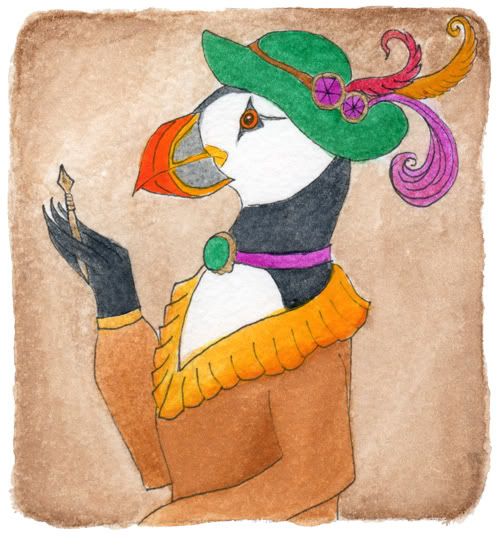
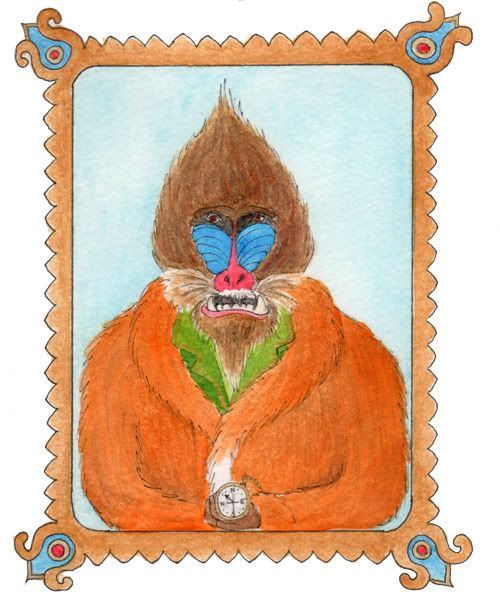
Lady Curnow, 1870


Lady Curnow, 1870

One of the most feared and respected matrons of London society, Lady Curnow reigned supreme over salons and tea houses alike with her scathing glares and impressive feathered hats. It is rumoured that a chance encounter with Oscar Wilde at a ball soon before he began writing The Importance of Being Earnest led to the creation of the majestic and terrifying Lady Bracknell, a story that Lady Curnow never stopped trying to quell, for she found theatre to have an immoral atmosphere not suited to women of her stature.

Thursday, April 16, 2009

Quick Detour from Victorians


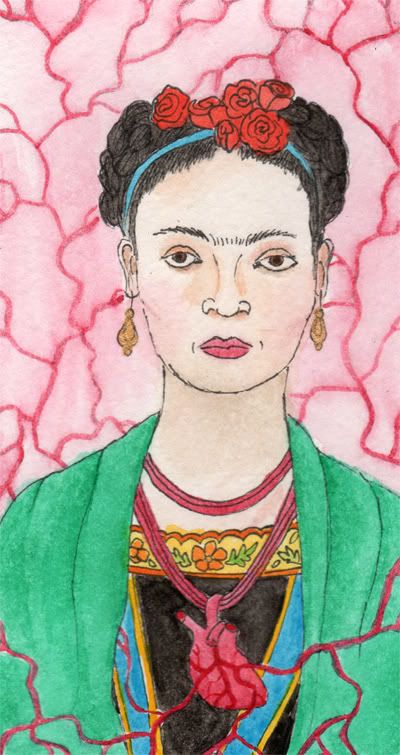
See? Told you I sometimes draw portraits of Frida.

Ofelia Ortiz, 1843


Ofelia Ortiz, 1843

Ofelia was born in Barcelona, but not long after her 17th birthday moved to Paris to be more fully immersed in the artistic community of Europe. A prolific author, she wrote over 50 novels and novellas during her lifetime and was regarded as a literary genius in certain circles.

During a visit to London in 1844, Ofelia caused quite a stir when she was invited to a swanky club and spent the evening canoodling with her host's female cousin. Though the authorities passed the incident off as an unusual outpouring of female friendliness (but nothing to be worried about), Ofelia was later revealed to be a lesbian when her letters were found in a box under her bed after her death. Those who read her novels today are seldom surprised to discover her sexual orientation, as she cleverly inserted references to erotic female love throughout nearly all of her books, references that were somehow not acknowledged by her contemporaries.

Wednesday, March 18, 2009

Ambrose Ashdown, 1858


Ambrose Ashdown, 1858

Born in Orkney in 1816, Ambrose was a sickly child who seldom left his mother's side. In his journals later in life, he attributes his sheltered childhood to the passion for exploring that struck him during his teenage years. At the age of 18 he left his tiny village and traveled to Edinburgh, where he met a man by the name of John McClure, who had signed on with Sir Robert Black to help organize an ambitious Arctic exploration. Ambrose was taken on, and in 1836 he sailed on the HMS Terror and spent the next four years in the far north.

After his return to Europe, he spent a few years working as a clerk in a London bank, but soon felt the exploring bug bite him harder than ever. Thankfully for Ambrose, his friend John McClure had become a captain in his own right and was in the process of putting together a team. In 1850 the HMS Investigator made its way north on a trip
that would end up lasting for almost a decade.

One of the key moments in the exploration came when the ship became hemmed in by ice. Leaving the crew to their own devices, Ambrose and John decided to set out on sledges and see what they could find in the vicinity. Though Ambrose's journals show that he was the one to find the majestic strait that would come to be known as the Viscount Melville Strait, as captain it was John McClure that claimed the discovery as his own.

Unaware of John's upcoming betrayal, Ambrose continued to work with him in their push farther north and may have helped him find the Northwest Passage. Upon the ship's eventual return to England, John was knighted and the rest of the crew given a token medal for their bravery, leaving Ambrose extremely bitter.

In 1859, Ambrose threw his medal in the Thames and set off on his own ship, Artemis. He returned to the Arctic and spent the rest of his days living in an Inuit village and pretending Europe did not exist.

Tuesday, March 3, 2009

More Yeti Goodness

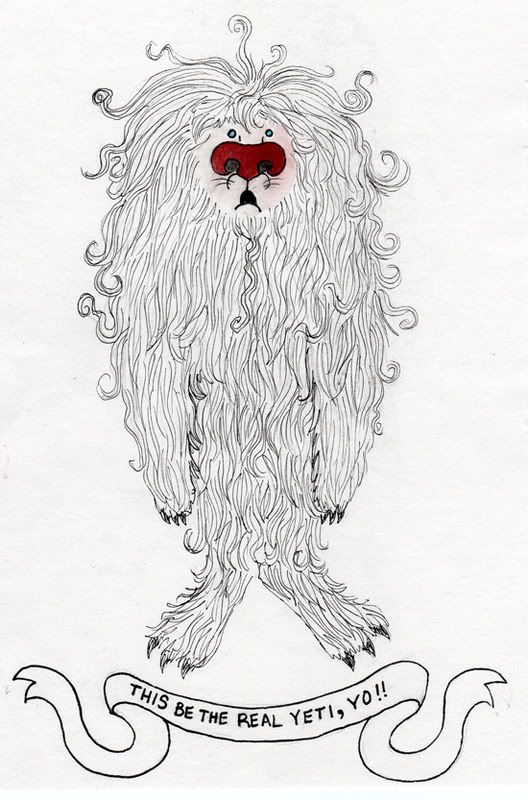
This one is more hirsute upon request.

Monday, March 2, 2009

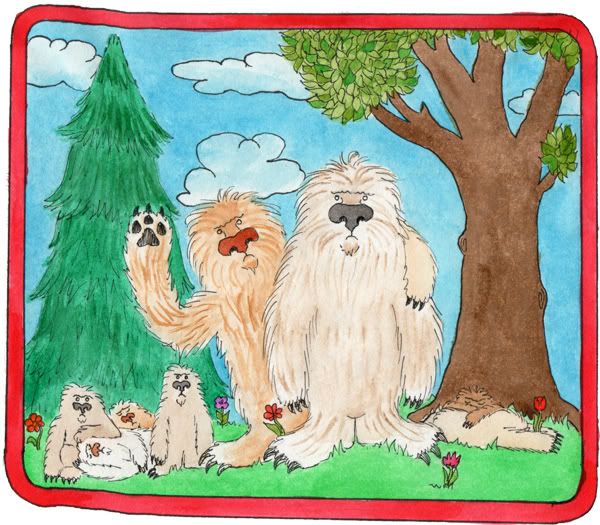
AND NOW FOR SOMETHING COMPLETELY YETI

Time for a quick detour away from Notable Victorians and towards storybook Yeti Land. Look at the yetlets! Aren't they precious??

(Apologies for the wonky scan - watercolour seriously warps my sketchbook.)

Sunday, March 1, 2009

Alonzo Purcell, 1878


Alonzo Purcell, 1878

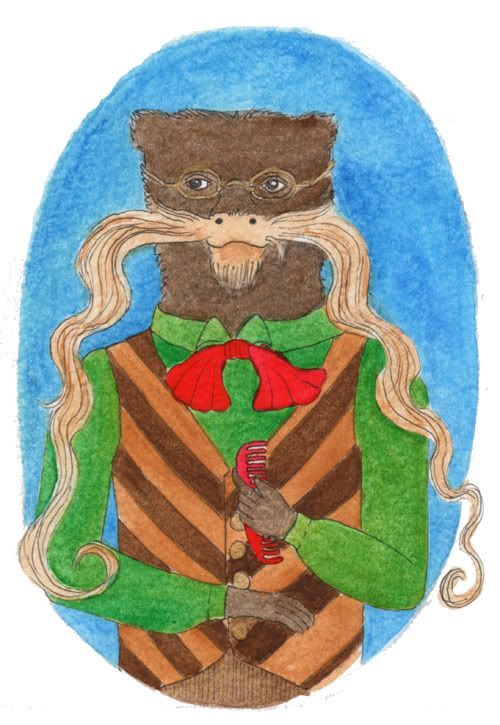
A consummate performer, Alonzo knew he wanted to be a part of a traveling show from the age of 5. When his moustache started to grow at the age of 17 and people began to comment on its virility, he knew his facial hair would be his ticket to stardom.

After only three years of growth, Alonzo beat the great Harlan Montrose, a.k.a. 'Mister Moustache', at the London Fair in the categories of both bushiness and length. After collecting his prize of twenty pounds, Alonzo was approached by Tom Norman (the future manager of the Elephant Man), then a young showman, and offered a spot on his lineup.

For three years Alonzo showed off his impressive 'stache in between the Skeleton Girl and the Balloon-Headed Baby (somehow Tom managed to procure an endless supply of such babies, thus extending the life of that exhibit), earning an impressive sum of money and charming all of England with his passionate poems on the benefits of a fine set of facial hair.

Once his contract with Tom ended, Alonzo went on to shill for Colonel Carrigan's FINEST Moustache Wax as well as enjoying a brief stint as Bath's poet laureate.

Tuesday, February 24, 2009

Walter Blackwood, 1881


Walter Blackwood, 1881

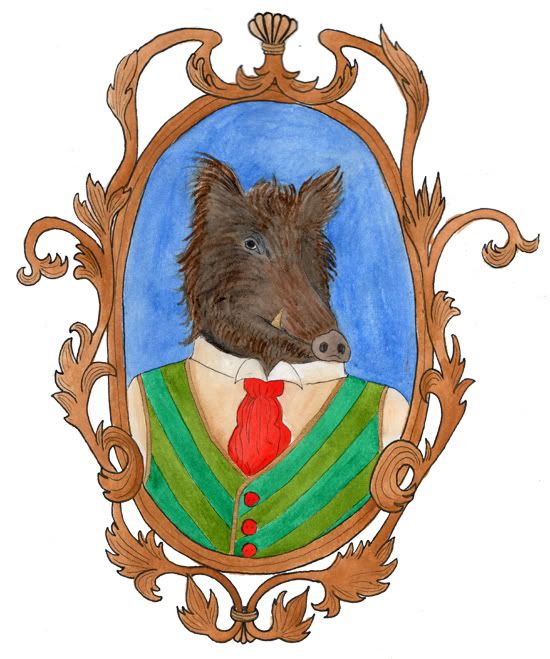
Walter Blackwood lived a relatively unassuming life just outside of London. Born to an accountant and a seamstress, he managed to secure himself a well-off bride and purchased a ramshackle estate from a doddering lord whose children were forcing him to move into the city for their convenience.

Once settled in to the grounds, Walter and his wife set to work fixing innumerable cracks, leaks, crumbling walls and mouse-infested cupboards. Three years passed before the main house could be considered truly livable, but the pair seemed to revel in the renovation, even waiting to procreate until the house and grounds were perfect.

They went on to have seven children, all of whom became lawyers.

Saturday, February 21, 2009

Miss Adella Alabaster, 1840


Miss Adella Alabaster, 1840

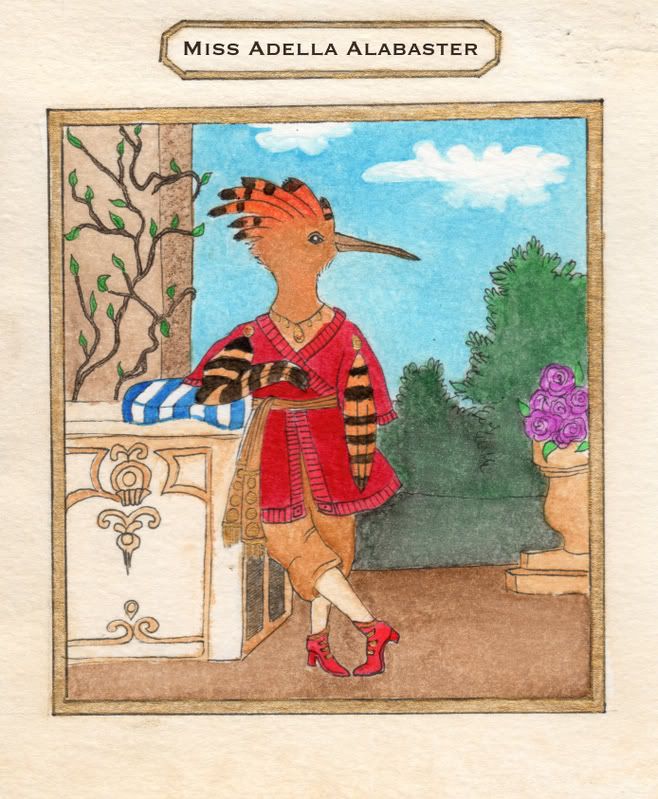
Though she began her performing life with a traveling troupe, Adella was a savvy businesswoman and quickly got her own agent and began securing headlining shows at such impressive venues as Picadilly Hall in London. She was not a freak in the literal sense, but with her excessive flexibility and charming stage demeanour, Adella became a bona fide star on stages across Europe.

Seamus & Samuel, 1846


Seamus & Samuel, Siamese Twins

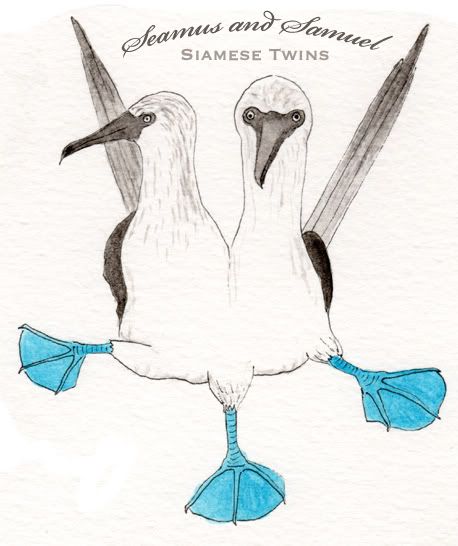
One of the top draws at Barnum's American Museum during the peak of its popularity, Seamus & Samuel were billed as conjoined twins found by a brave explorer during his trek into the darkest heart of Siam and brought back to New York, where they picked up English at an impressive rate and soon learned to live a fully civilized life.

In actuality, the twins were born in Chicago, but the secret of their origin was not revealed until many years later, when Samuel wrote a tell-all book about his life.