Monday, November 30, 2009

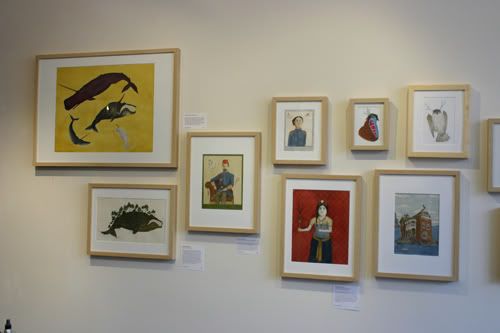
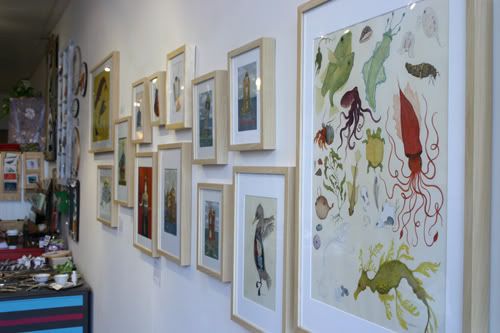
The rest of the Notable Victorians show!

Now that the rich have taken their place in the blog lineup, it's time for the poor side of the show to have their moment in the (gritty, smog-obscured) sun.


Owen, a Highland cow & butcher


Sally, a rhinoceros & prostitute


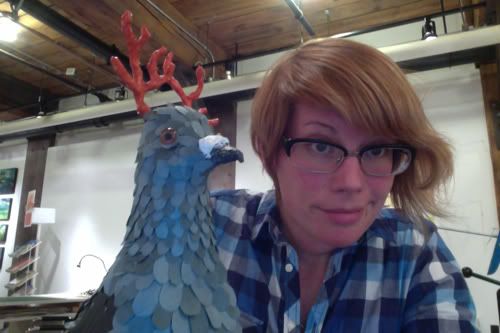
Archie, a pigeon & chimney sweep


Philip, a pelican & fishmonger


Poppy, a hyena & prostitute


Clarissa, a gazelle & flower-seller


Wilbur, a capybara & prizewinning piemaker


Charlie, a black swan & charlatan

Backlog + backlog + BACKLOG

It seems as if I've been horribly lax in posting, well, anything. Therefore it is time for a PICTURE DUMP (part one of two or three).

I'll start with a digital overview of my show, Notable Victorians. Here are most of the rich Victorians who took part (two have already been posted in previous entries):


Lady Upton, a giraffe


Lydia Colston, a great horned owl


Ernestine Blackworthy, a sloth


Calvin Kneebone, an okapi


Horatio Grigg, a peacock


Marcus Shinnick, a ringtail lemur


Eudora Drummond, a tapir


Randolph Toohey, a turkey vulture


Thursday, June 25, 2009

Extended Absence - But There's a Reason!

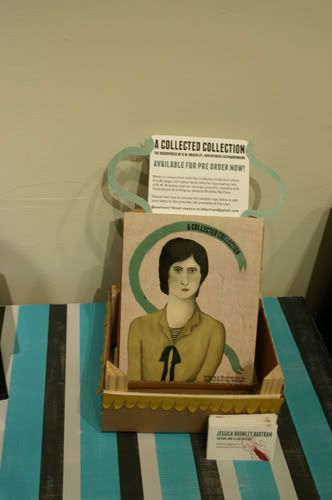
I apologize for the dearth of Notable Victorians in this corner of the web. Though a part of the absence has been the result of my own procrastination combined with a large heap of busy-June, I now have an actual reason for my delinquency: Notable Victorians is coming soon to a very special little shop/gallery in Toronto!

That's right - I'm having a real, live show! It opens in two weeks and I'm in the process of working on various elements of the event (finishing up pieces, framing, etc.). For anyone in/near Toronto who might like to attend, the information is as follows:

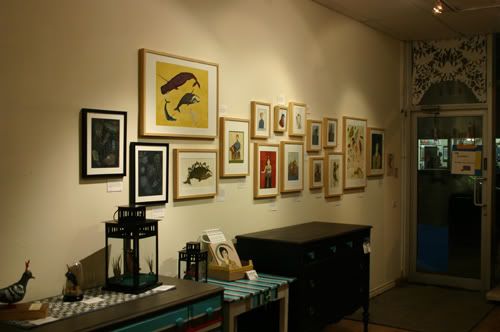
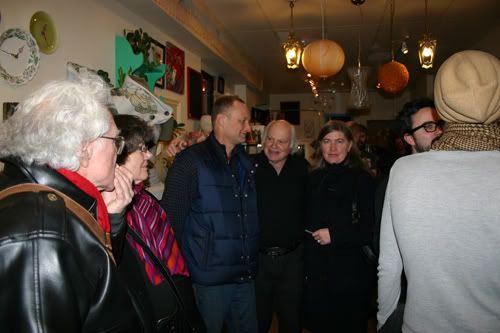
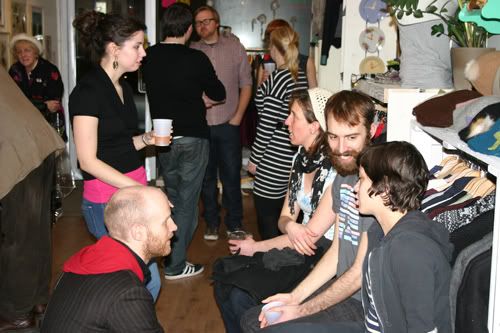
NOTABLE VICTORIANS - July 10th, 2009 from 7-10 p.m. at Industtrees (1234 College St.). Refreshments will be provided, as will animals in Victorian garb.

Be there or be quadrilateral!

In related news, I will soon be moving most of my operations to an actual web domain of my very own. I shall of course announce when that site is up and running.

Monday, May 4, 2009

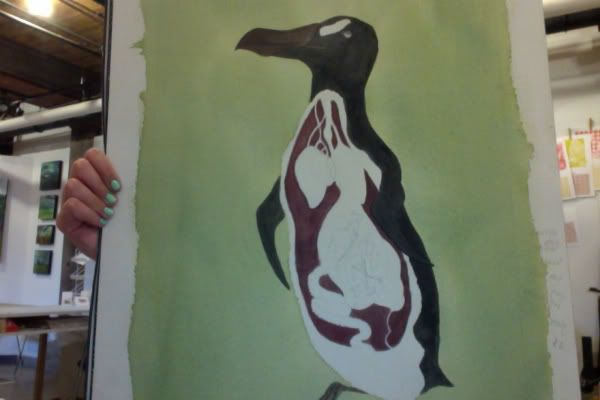
Notable Extinctions

These three poor souls have the misfortune of being mysterious by virtue of their extinction. So sad.


Budgie Dump

I'm by no means planning to quit with the text portion of this blog, but my current backlog of creatures is so daunting I feel I must just get some posted sans-story. Don't pity them too much - they'll get their stories told sooner or later.

Now, without futher ado, BUDGIES:


Wednesday, April 22, 2009

Harold Merrypenny, 1862


Harold Merrypenny, 1862

From the piles of journals Harold left behind, it is impossible to miss the fact that he considered himself a bold and fearless explorer, one who charted new frontiers and uncovered unknown lands. It is also possible to glean from those same journals that Harold was most likely a little bit insane, seeing as he spent his entire life exploring just one London neighbourhood.

Born in Camden, Harold never left those few square kilometres of cobblestone, but from the age of 17 slowly worked his way from one end of the neighbourhood to the other, taking elaborate notes and sketching numerous streetscapes in his dogeared journals. The other inhabitants of Camden considered Harold entertainment, and passersby would often request suggestions for the best pub in the far southeast corner, or inquire as to his progress that day.

Lady Curnow, 1870


Lady Curnow, 1870

One of the most feared and respected matrons of London society, Lady Curnow reigned supreme over salons and tea houses alike with her scathing glares and impressive feathered hats. It is rumoured that a chance encounter with Oscar Wilde at a ball soon before he began writing The Importance of Being Earnest led to the creation of the majestic and terrifying Lady Bracknell, a story that Lady Curnow never stopped trying to quell, for she found theatre to have an immoral atmosphere not suited to women of her stature.

Thursday, April 16, 2009

Quick Detour from Victorians


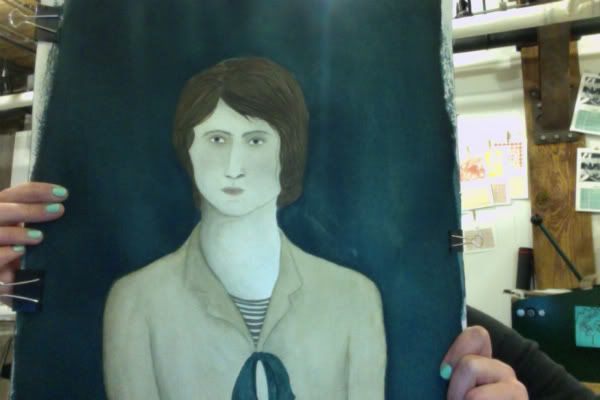
See? Told you I sometimes draw portraits of Frida.

Ofelia Ortiz, 1843


Ofelia Ortiz, 1843

Ofelia was born in Barcelona, but not long after her 17th birthday moved to Paris to be more fully immersed in the artistic community of Europe. A prolific author, she wrote over 50 novels and novellas during her lifetime and was regarded as a literary genius in certain circles.

During a visit to London in 1844, Ofelia caused quite a stir when she was invited to a swanky club and spent the evening canoodling with her host's female cousin. Though the authorities passed the incident off as an unusual outpouring of female friendliness (but nothing to be worried about), Ofelia was later revealed to be a lesbian when her letters were found in a box under her bed after her death. Those who read her novels today are seldom surprised to discover her sexual orientation, as she cleverly inserted references to erotic female love throughout nearly all of her books, references that were somehow not acknowledged by her contemporaries.

Wednesday, March 18, 2009

Ambrose Ashdown, 1858


Ambrose Ashdown, 1858

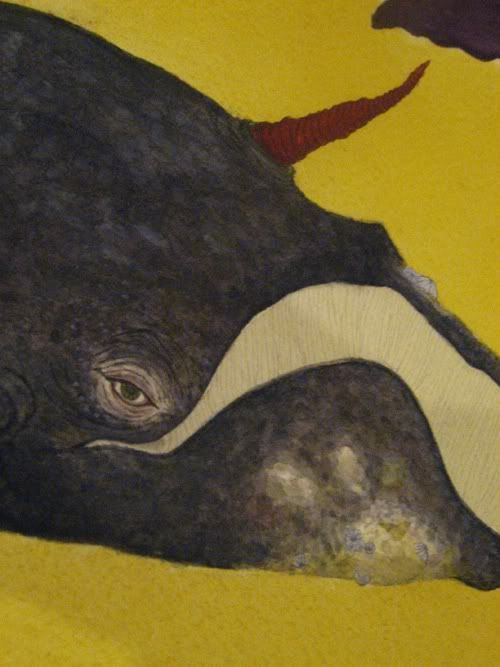
Born in Orkney in 1816, Ambrose was a sickly child who seldom left his mother's side. In his journals later in life, he attributes his sheltered childhood to the passion for exploring that struck him during his teenage years. At the age of 18 he left his tiny village and traveled to Edinburgh, where he met a man by the name of John McClure, who had signed on with Sir Robert Black to help organize an ambitious Arctic exploration. Ambrose was taken on, and in 1836 he sailed on the HMS Terror and spent the next four years in the far north.

After his return to Europe, he spent a few years working as a clerk in a London bank, but soon felt the exploring bug bite him harder than ever. Thankfully for Ambrose, his friend John McClure had become a captain in his own right and was in the process of putting together a team. In 1850 the HMS Investigator made its way north on a trip
that would end up lasting for almost a decade.

One of the key moments in the exploration came when the ship became hemmed in by ice. Leaving the crew to their own devices, Ambrose and John decided to set out on sledges and see what they could find in the vicinity. Though Ambrose's journals show that he was the one to find the majestic strait that would come to be known as the Viscount Melville Strait, as captain it was John McClure that claimed the discovery as his own.

Unaware of John's upcoming betrayal, Ambrose continued to work with him in their push farther north and may have helped him find the Northwest Passage. Upon the ship's eventual return to England, John was knighted and the rest of the crew given a token medal for their bravery, leaving Ambrose extremely bitter.

In 1859, Ambrose threw his medal in the Thames and set off on his own ship, Artemis. He returned to the Arctic and spent the rest of his days living in an Inuit village and pretending Europe did not exist.