Showing posts with label watercolour. Show all posts

Wednesday, June 29, 2011

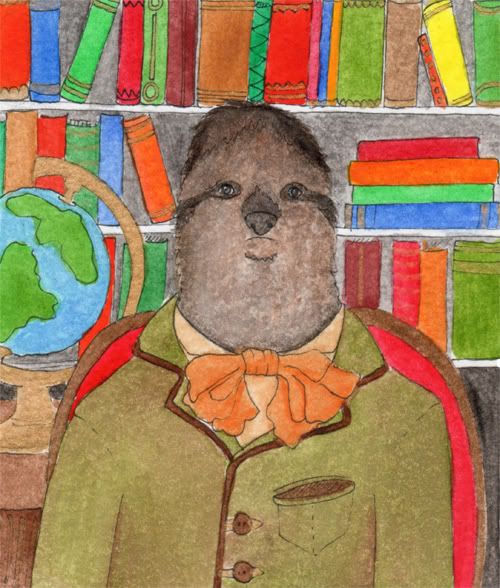
Leland & Friends

Dear Everyone Who Reads This Here Blog:

I have a show up for the month of July! I just got back from hanging the thing and am exhausted but happy to see a bunch of work up and in frames (one of the most satisfying parts of creating art, methinks).

The show is called "Characters" and contains 19 of my Victorian watercolours - here's one of them:


If anyone wants to visit these Victorian dudes and ladies, just pop on over to Poor John's, which is at 1610 Queen Street West (in Toronto). Hope you'll be able to stop by!

Tuesday, April 12, 2011

Victorian-a-rama!

Though my life's been strangely busy for an unemployed lady (freelance design projects + web design days + Exciting Business Meetings + yes, a little too much sleeping in = surprisingly little time and very short-feeling weeks), I've managed to find the time to paint up a strange, Victorian storm.

The characters shown below (plus a few more, who will be featured on the blog in coming days) will all be FOR SALE up on Etsy by the end of the week - if one of them manages to strike your fancy, please welcome them into your abode, for every cent raised from their sale will go towards the support of the about-to-open gallery/working studio project in which I'm involved (as well as my own artistic endeavours).

Strange Victorians for a good cause - what could be better?

Without further ado, here's the first crowd. Check back soon for more info on how to invite these dudes and ladies into your life!

Click image for more detail, please:

Monday, February 28, 2011

#80: A Practice Celebration

Well then.

It seems as if I have reached my 80th post since it all started just over two years ago with some clothes-wearing bears. Back then I'd just gotten back into regular art production, having left it behind for four years while I studied English literature at university. Though I'd never really liked watercolours much before, they were the only colouring method I had on hand, so I picked them up and man - I've not looked back since.

Two-ish years, two shows and most likely more than 100 paintings of strange creatures later, watercolours are my dearest friend, providing me with glorious washes and intricate detail and the most curiously luminous colours a girl could ask for. So thanks for being you, watercolours - thanks a bunch!

Phew, That was more than enough sentimentality, don't you think? To cut the sugar of my ode to art & watercolour-y goodness, allow me to show you some sketchbook experiments I've been performing in recent weeks.

The subject?

PEOPLE.
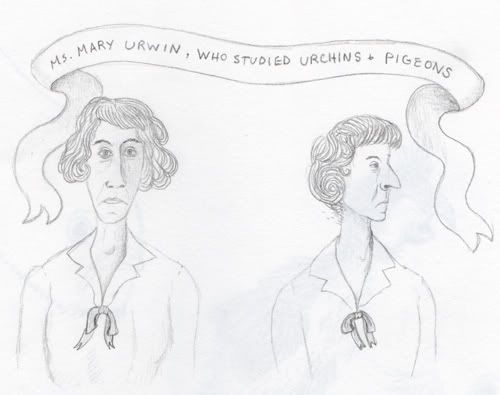


Can you even believe it? Look around you! These are PEOPLE in Victorian clothing! No animals in sight!!
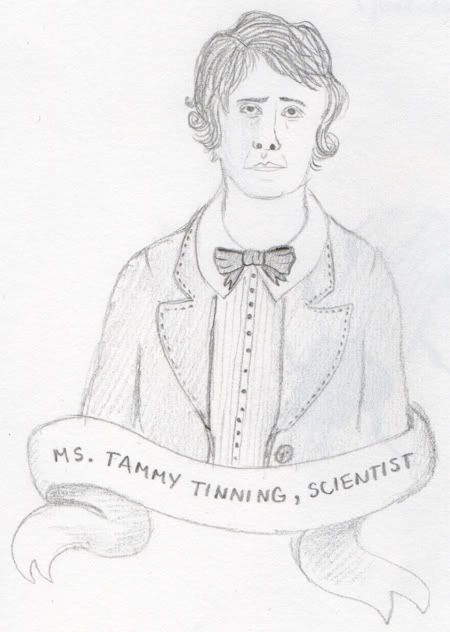


I made the tough (for me...people are way more intimidating to draw than animals/birds/etc.) decision to have the main characters for the next show/book be Victorian humans, as they'd give me more leeway in the curious creatures their imaginary studies could cover (on that note, there will be more detail about my current project coming in future entries...man, I'm excited for this one!!).
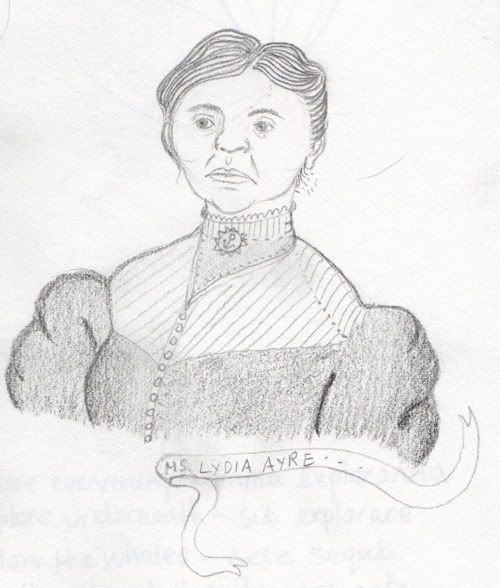
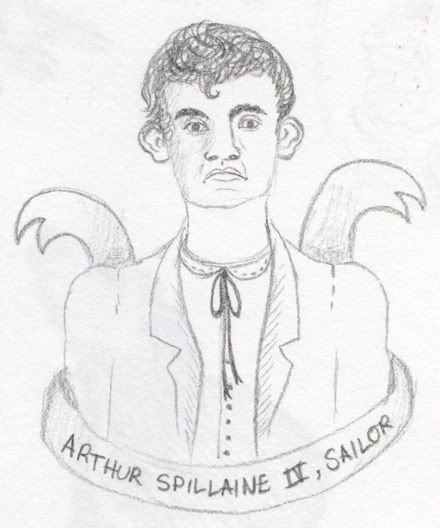


These characters are all culled from Flickr, which holds a rich collection of scanned vintage photographs, many of which contain the most incredible faces - stunning beards, whimsical moustaches, elaborate hairdos and glorious noses abound, along with a plethora of delectable dresses, waistcoats, military jackets and suits, everything providing fodder for a whole new artistic direction!
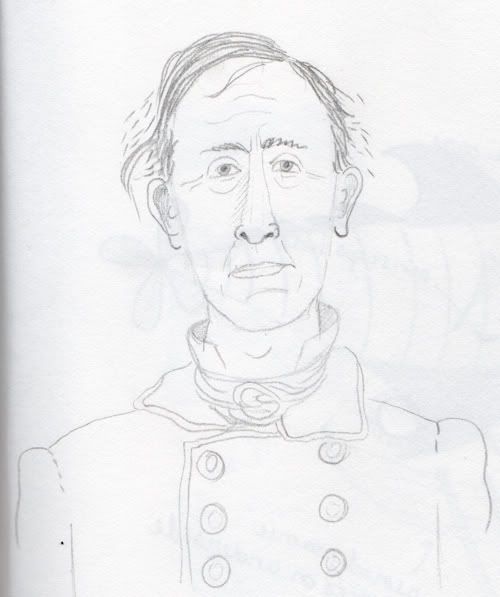
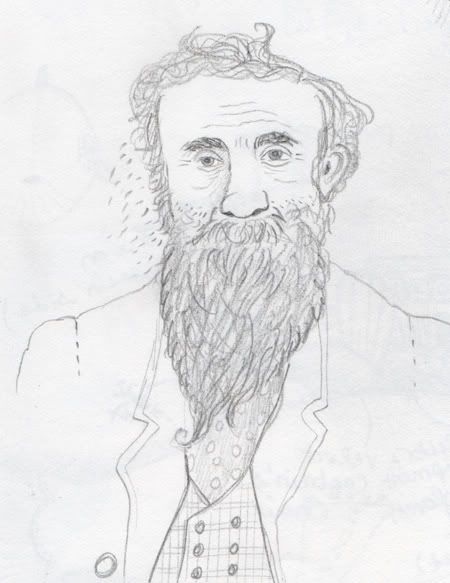


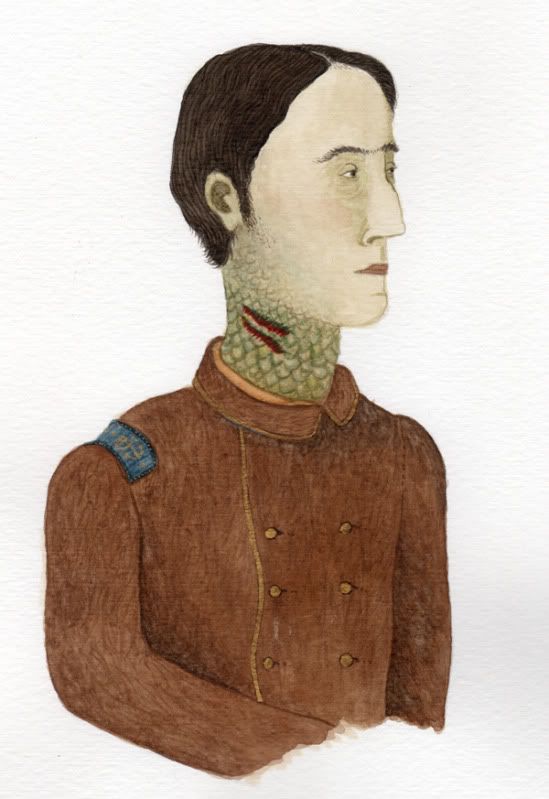
After making myriad sketches, I've developed just enough confidence to begin transferring my favourite faces over to watercolour paper, where they'll eventually become pieces for the next show. Below is a wee timeline of one such piece:
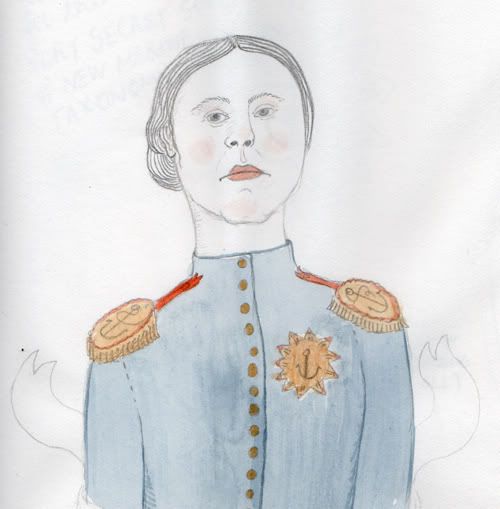


This is the sketchbook version of an as of yet unnamed woman, dressed in the regalia of a secret society (which you will hear more about in later entries!).
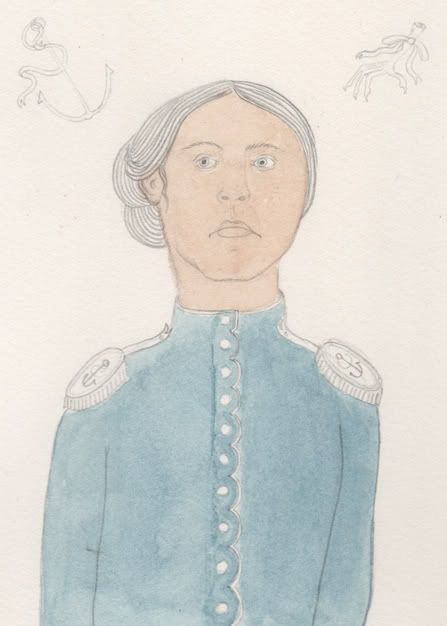


And here's the current progress of the 'good copy' - initial washes complete, ready for layers and miniscule detail!


So that's a peek into my sketchbook's most recent denizens - please do stay tuned, as I have another entry coming up quite soon, which will contain more peeks into the new project as well as a few more details about the project's theme and such.

Monday, May 4, 2009

Budgie Dump

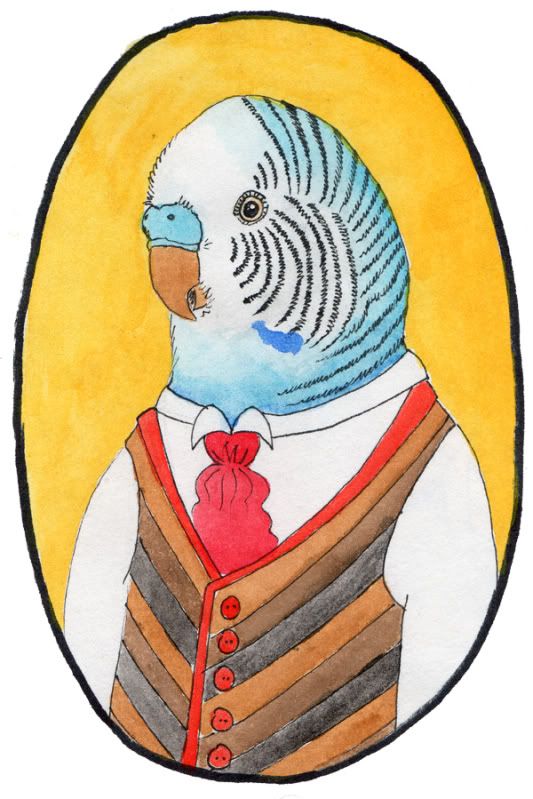
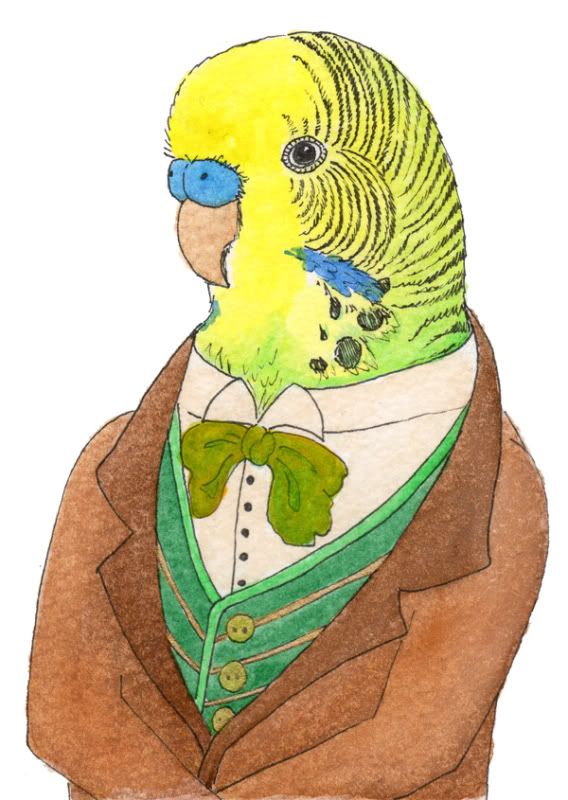
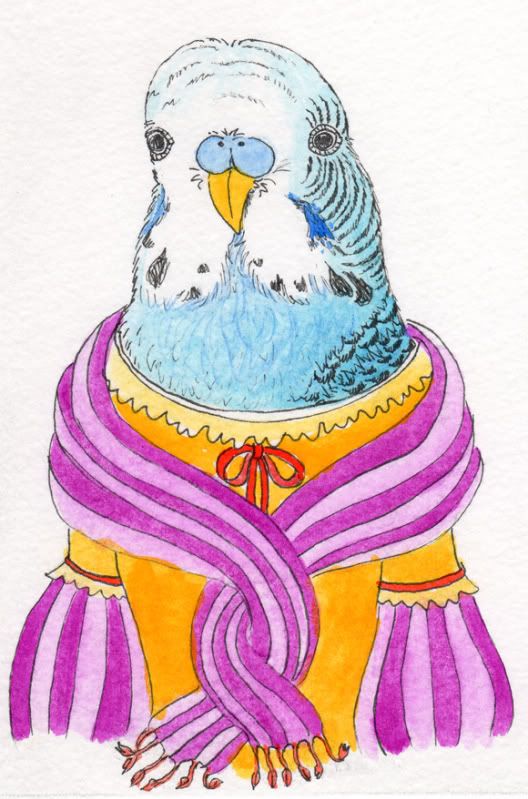
I'm by no means planning to quit with the text portion of this blog, but my current backlog of creatures is so daunting I feel I must just get some posted sans-story. Don't pity them too much - they'll get their stories told sooner or later.

Now, without futher ado, BUDGIES:


Wednesday, April 22, 2009

Harold Merrypenny, 1862


Harold Merrypenny, 1862

From the piles of journals Harold left behind, it is impossible to miss the fact that he considered himself a bold and fearless explorer, one who charted new frontiers and uncovered unknown lands. It is also possible to glean from those same journals that Harold was most likely a little bit insane, seeing as he spent his entire life exploring just one London neighbourhood.

Born in Camden, Harold never left those few square kilometres of cobblestone, but from the age of 17 slowly worked his way from one end of the neighbourhood to the other, taking elaborate notes and sketching numerous streetscapes in his dogeared journals. The other inhabitants of Camden considered Harold entertainment, and passersby would often request suggestions for the best pub in the far southeast corner, or inquire as to his progress that day.

Lady Curnow, 1870


Lady Curnow, 1870

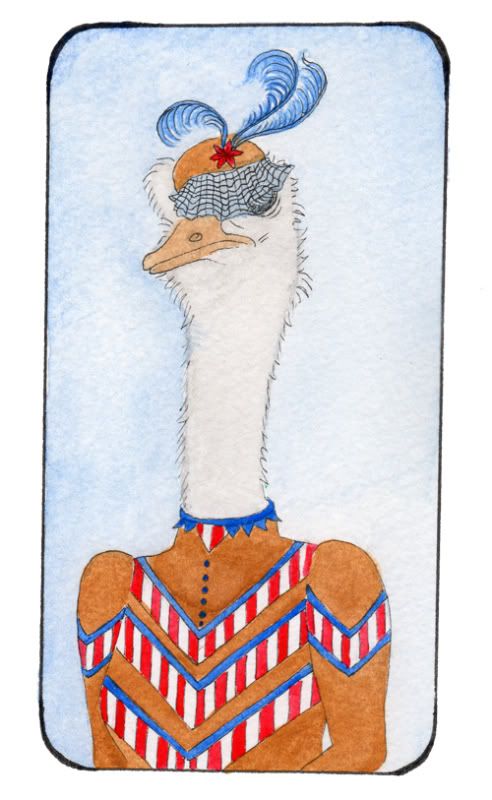
One of the most feared and respected matrons of London society, Lady Curnow reigned supreme over salons and tea houses alike with her scathing glares and impressive feathered hats. It is rumoured that a chance encounter with Oscar Wilde at a ball soon before he began writing The Importance of Being Earnest led to the creation of the majestic and terrifying Lady Bracknell, a story that Lady Curnow never stopped trying to quell, for she found theatre to have an immoral atmosphere not suited to women of her stature.

Thursday, April 16, 2009

Quick Detour from Victorians


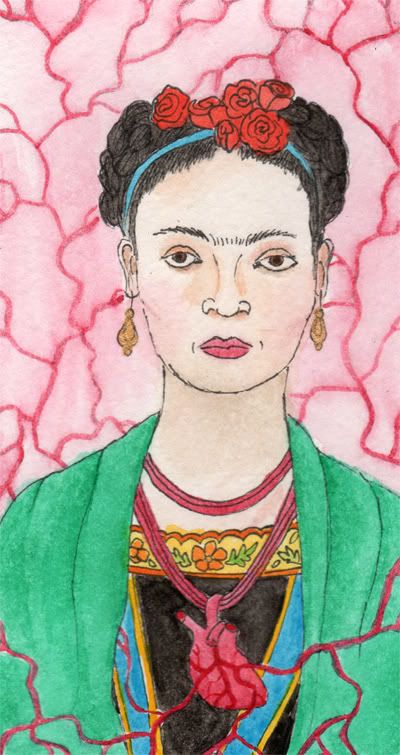
See? Told you I sometimes draw portraits of Frida.

Ofelia Ortiz, 1843


Ofelia Ortiz, 1843

Ofelia was born in Barcelona, but not long after her 17th birthday moved to Paris to be more fully immersed in the artistic community of Europe. A prolific author, she wrote over 50 novels and novellas during her lifetime and was regarded as a literary genius in certain circles.

During a visit to London in 1844, Ofelia caused quite a stir when she was invited to a swanky club and spent the evening canoodling with her host's female cousin. Though the authorities passed the incident off as an unusual outpouring of female friendliness (but nothing to be worried about), Ofelia was later revealed to be a lesbian when her letters were found in a box under her bed after her death. Those who read her novels today are seldom surprised to discover her sexual orientation, as she cleverly inserted references to erotic female love throughout nearly all of her books, references that were somehow not acknowledged by her contemporaries.

Wednesday, March 18, 2009

Ambrose Ashdown, 1858


Ambrose Ashdown, 1858

Born in Orkney in 1816, Ambrose was a sickly child who seldom left his mother's side. In his journals later in life, he attributes his sheltered childhood to the passion for exploring that struck him during his teenage years. At the age of 18 he left his tiny village and traveled to Edinburgh, where he met a man by the name of John McClure, who had signed on with Sir Robert Black to help organize an ambitious Arctic exploration. Ambrose was taken on, and in 1836 he sailed on the HMS Terror and spent the next four years in the far north.

After his return to Europe, he spent a few years working as a clerk in a London bank, but soon felt the exploring bug bite him harder than ever. Thankfully for Ambrose, his friend John McClure had become a captain in his own right and was in the process of putting together a team. In 1850 the HMS Investigator made its way north on a trip
that would end up lasting for almost a decade.

One of the key moments in the exploration came when the ship became hemmed in by ice. Leaving the crew to their own devices, Ambrose and John decided to set out on sledges and see what they could find in the vicinity. Though Ambrose's journals show that he was the one to find the majestic strait that would come to be known as the Viscount Melville Strait, as captain it was John McClure that claimed the discovery as his own.

Unaware of John's upcoming betrayal, Ambrose continued to work with him in their push farther north and may have helped him find the Northwest Passage. Upon the ship's eventual return to England, John was knighted and the rest of the crew given a token medal for their bravery, leaving Ambrose extremely bitter.

In 1859, Ambrose threw his medal in the Thames and set off on his own ship, Artemis. He returned to the Arctic and spent the rest of his days living in an Inuit village and pretending Europe did not exist.

Monday, March 2, 2009

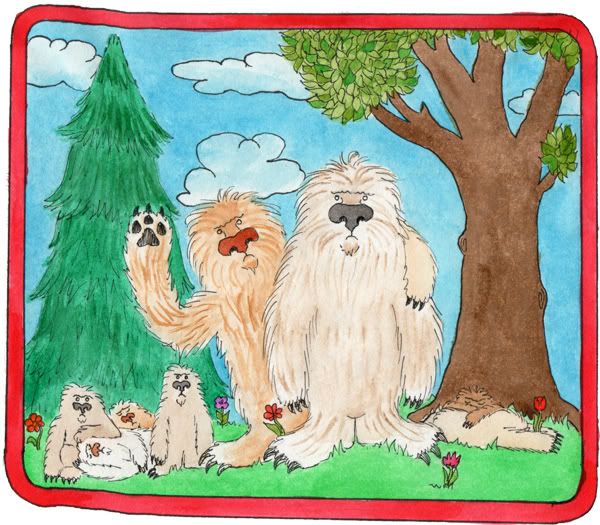
AND NOW FOR SOMETHING COMPLETELY YETI

Time for a quick detour away from Notable Victorians and towards storybook Yeti Land. Look at the yetlets! Aren't they precious??

(Apologies for the wonky scan - watercolour seriously warps my sketchbook.)

Sunday, March 1, 2009

Alonzo Purcell, 1878


Alonzo Purcell, 1878

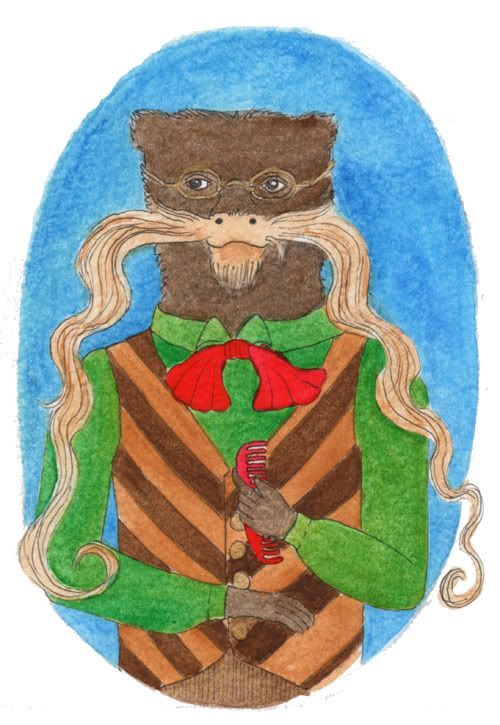
A consummate performer, Alonzo knew he wanted to be a part of a traveling show from the age of 5. When his moustache started to grow at the age of 17 and people began to comment on its virility, he knew his facial hair would be his ticket to stardom.

After only three years of growth, Alonzo beat the great Harlan Montrose, a.k.a. 'Mister Moustache', at the London Fair in the categories of both bushiness and length. After collecting his prize of twenty pounds, Alonzo was approached by Tom Norman (the future manager of the Elephant Man), then a young showman, and offered a spot on his lineup.

For three years Alonzo showed off his impressive 'stache in between the Skeleton Girl and the Balloon-Headed Baby (somehow Tom managed to procure an endless supply of such babies, thus extending the life of that exhibit), earning an impressive sum of money and charming all of England with his passionate poems on the benefits of a fine set of facial hair.

Once his contract with Tom ended, Alonzo went on to shill for Colonel Carrigan's FINEST Moustache Wax as well as enjoying a brief stint as Bath's poet laureate.

Tuesday, February 24, 2009

Walter Blackwood, 1881


Walter Blackwood, 1881

Walter Blackwood lived a relatively unassuming life just outside of London. Born to an accountant and a seamstress, he managed to secure himself a well-off bride and purchased a ramshackle estate from a doddering lord whose children were forcing him to move into the city for their convenience.

Once settled in to the grounds, Walter and his wife set to work fixing innumerable cracks, leaks, crumbling walls and mouse-infested cupboards. Three years passed before the main house could be considered truly livable, but the pair seemed to revel in the renovation, even waiting to procreate until the house and grounds were perfect.

They went on to have seven children, all of whom became lawyers.

Saturday, February 21, 2009

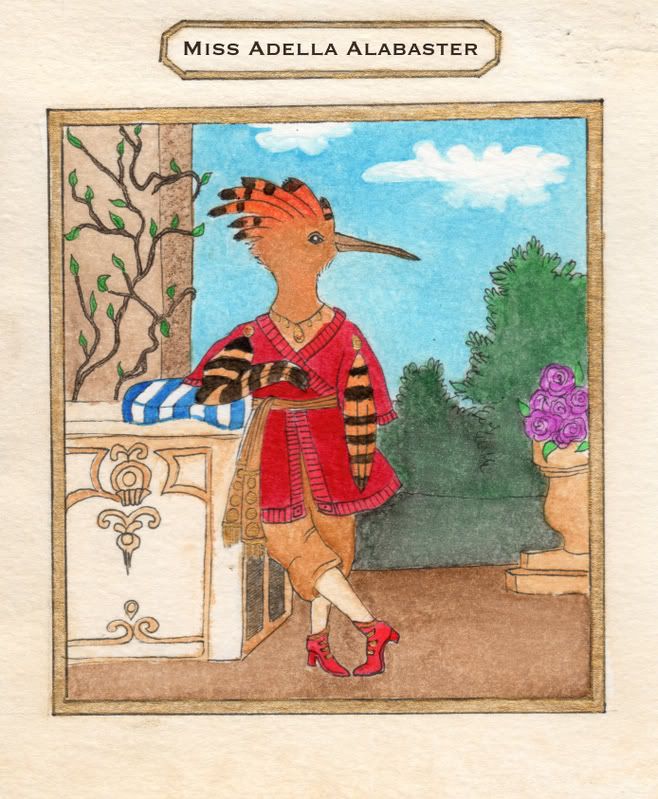
Miss Adella Alabaster, 1840


Miss Adella Alabaster, 1840

Though she began her performing life with a traveling troupe, Adella was a savvy businesswoman and quickly got her own agent and began securing headlining shows at such impressive venues as Picadilly Hall in London. She was not a freak in the literal sense, but with her excessive flexibility and charming stage demeanour, Adella became a bona fide star on stages across Europe.

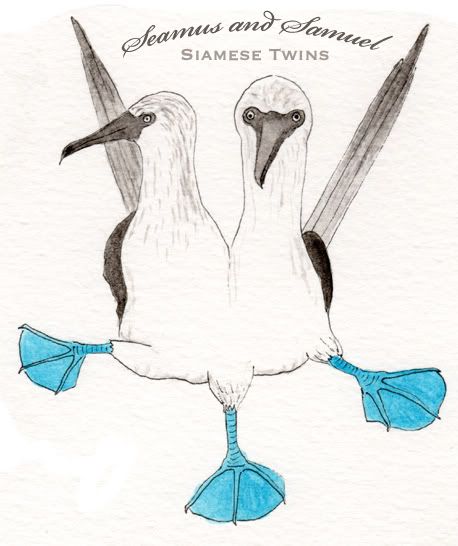
Seamus & Samuel, 1846


Seamus & Samuel, Siamese Twins

One of the top draws at Barnum's American Museum during the peak of its popularity, Seamus & Samuel were billed as conjoined twins found by a brave explorer during his trek into the darkest heart of Siam and brought back to New York, where they picked up English at an impressive rate and soon learned to live a fully civilized life.

In actuality, the twins were born in Chicago, but the secret of their origin was not revealed until many years later, when Samuel wrote a tell-all book about his life.

Gideon Madill, 1862


Gideon Madill, 1862

Gideon considered himself a nihilist philosopher and was therefore quite out of fashion amongst his contemporaries. While John Stewart Mill spoke of securing the greatest happiness for the largest number of people, Gideon stuck to his anomie, writing excessively long papers about the futility of life and his conviction that the world around him was entirely meaningless.

Later scholars came to believe that this gloomy view of life was directly related to the death of his childhood sweetheart at the age of eighteen, only a few months before their wedding was to happen. Nevertheless, as a philosopher he made some interesting forays into the subject of life's futility and wrote elegantly about his crushing malaise.

Buford Blewett, 1870


Buford Blewett, 1870

Coming from humble beginnings as a farmer's son, Buford pulled himself handily up by his bootstraps and became one of the best-known politicians of his day. Well-read and charming, he was known for his blustery speeches, which never failed to whip crowds into frenzies of passionate support. His political bent was evident from his first days at Oxford, where he studied law and made a name for himself as a tough debate opponent.

Buford was on his way to becoming Prime Minister of England when scandal struck - his wife Caroline accused him of adultery. The issue might have fallen out of public notice without a sound had letters between Buford and his alleged mistress not been found and subsequently printed in the papers, leading to a trial that rocked London, as their beloved Buford Blewett was unable to deny that the letters were real and was forced to step down from public office, allow his wife the divorce she was seeking, and retreat into the country, where he reportedly lived with his mistress until his death in 1900.

Perry Longsbury, 1886


Perry Longsbury, 1886

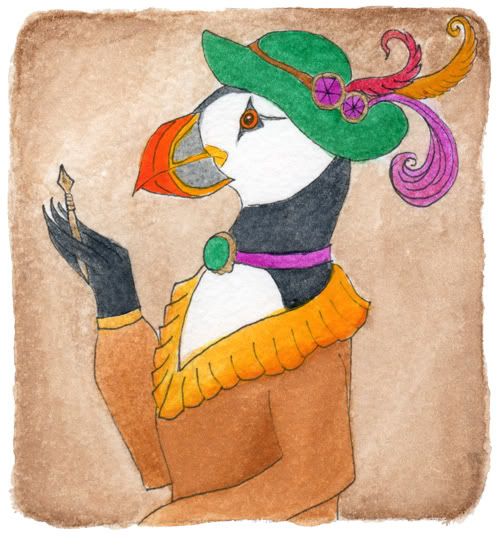
Perry was born to a life of wealth and privilege, but, like many youth of his time, rejected his father's estate at the age of 17 and set off to experience a life of danger and adventure. This photo shows him on the borders of his family estate in his traveling clothes, ready to set off into the great wide world and find his own way without the aids of money and social status.

Unfortunately for Perry, his adventures did not last long. He was the victim of highway robbery not long after landing in France and wound up working as the stable boy at a tavern in Lille called Le Macareux, too proud to return and bear his father's scorn. During his time at the tavern, Perry fell in love with the barmaid and the pair wound up marrying and living out the rest of their days on a small farm just outside the town limits.

Friday, February 13, 2009

More V-day Nonsense

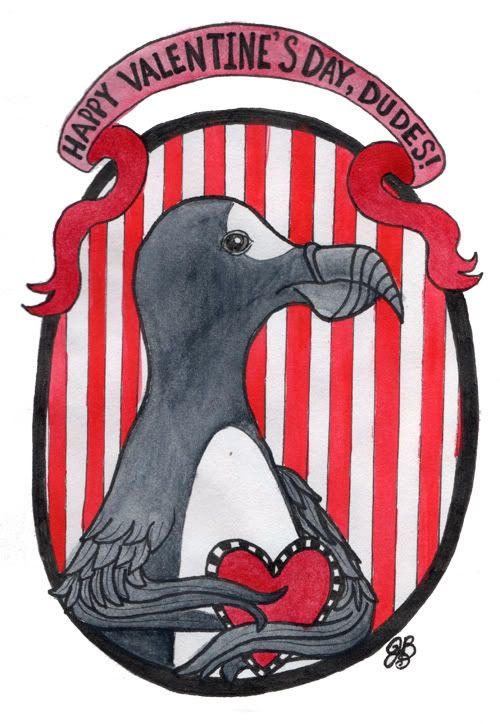
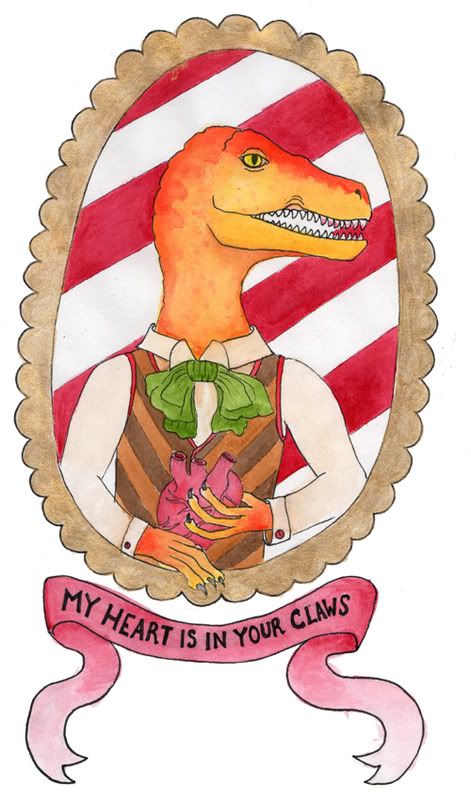
OK, here goes with the rest of the Valentines Day silliness!


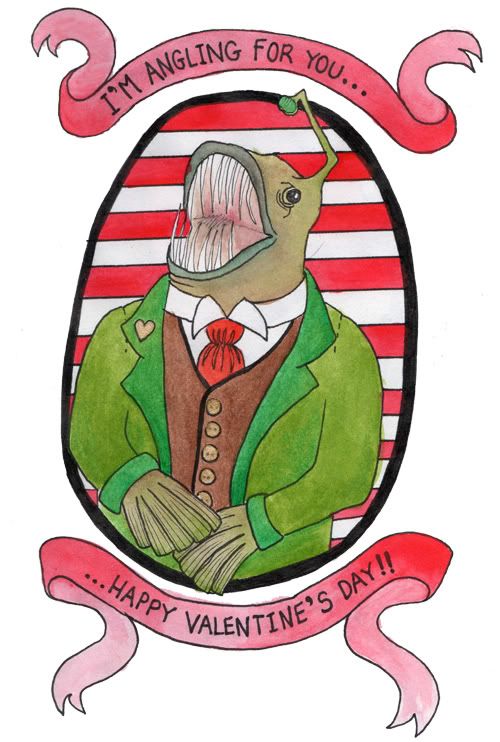
I think this guy might be my favourite - anglerfishes represent!


Also, CLICK HERE to download your very own set of the valentines - creep out your friends, family or spouse!!

More non-festive art to follow this weekend (I've been painting up a storm these days, so there's actually quite the backlog).

Break for Hearts!

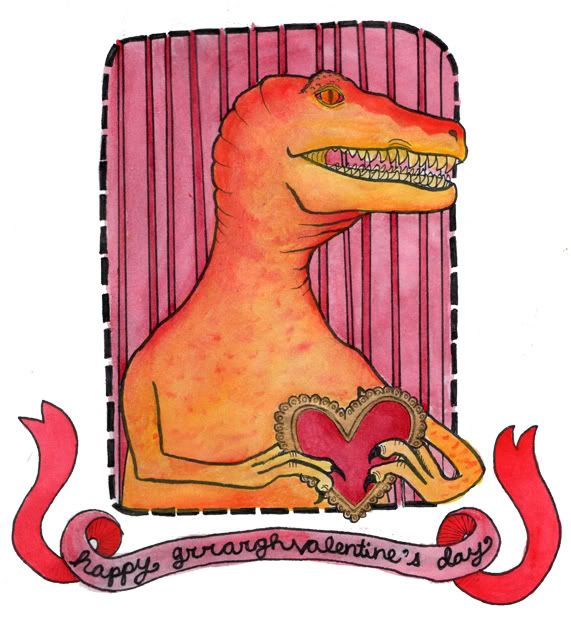
Since it's V-day 'round these parts, I figured that there might be a need for some non-saccharine valentines to celebrate this silly day. Here's the first:


Also, this is being submitted to Illustration Friday as soon as I get home (the word of the week is celebrate, I thought this might fit).

The next three V-day dudes will be coming up in a moment.

Friday, January 30, 2009

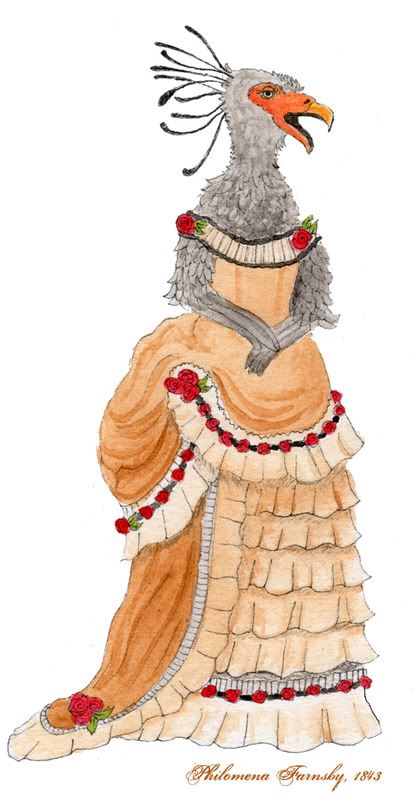
Philomena Farnsby, 1843


Philomena Farnsby, 1843

In a review of Carmen, Philomena Farnsby was described as, "an illuminated performance never matched before...as Carmen, Miss Farnsby conquered the stage and captivated the entire theatre with her angelic voice."

Not only did Miss Farnsby find herself a star of the London stage, she also posed for a number of Godey's fashion plates, helping the catalogue sell the dresses she modeled at an unprecedented rate.