Wednesday, January 28, 2009

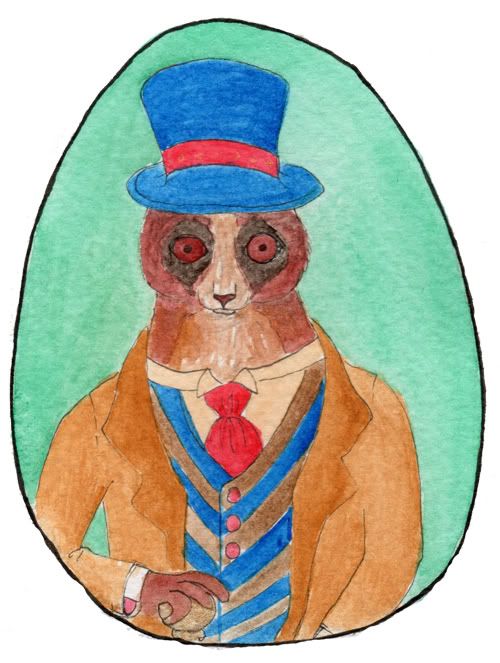
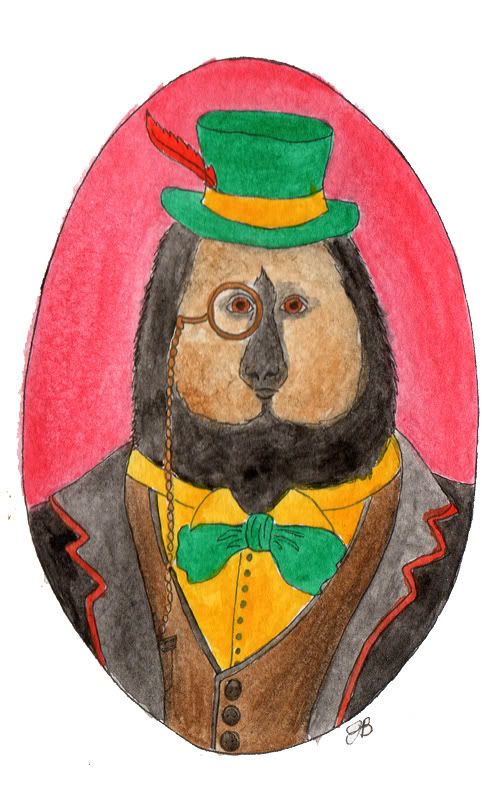
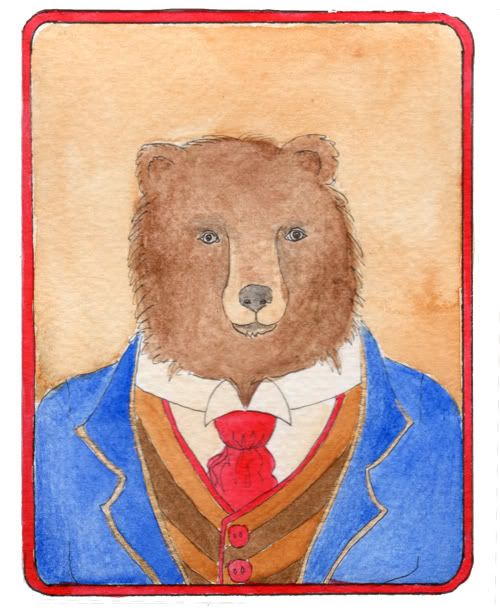
Crowley Harthington, 1888


Crowley Harthington, 1888

Born in Paris to a pair of British ex-pats, Crowley often cursed his parents for giving him such a distinctly English name, as it made his integration into the Bohemian artist's quarter of Paris all the more difficult. Luckily, he was blessed with a gift for words, and was able to spout passable poems even when entirely drunk off of absinthe.

He published only one official book, but managed to get a number of poems into Parisian newspapers and periodicals, thus becoming a minor celebrity in the city. One of his poems, 'Musings Upon a Honey Bee Lost in Paris' was a sensation throughout Europe for its subtle sexual overtones, though Crowley himself always denied any sensual slant to the piece.

The most contested stanza was printed as follows:

"When the furry honey bee
Did flitter down upon my hairy knee,
All a-sudden my leg did shake

But the little creature did not flee
Instead she peeked coyly up at me
And wondered how much honey I did make

-- O! And I was shy, you see,
For I could not fathom how that bee
Had any thought for a bear like me.
"

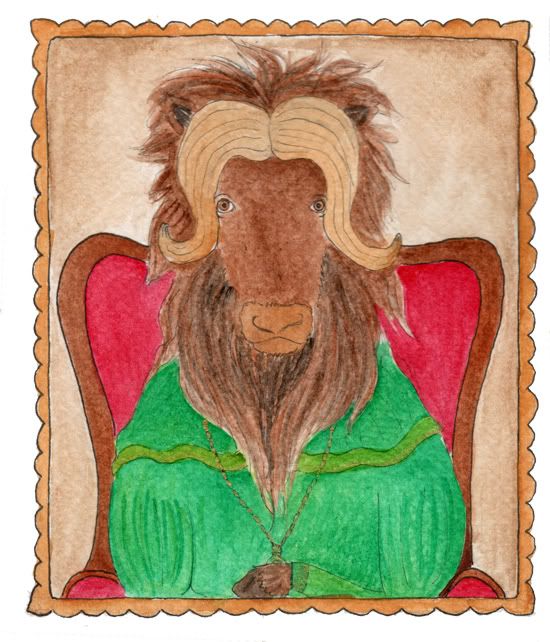
Calvin Sanderlen, 1868


Calvin Sanderlen, 1868

Known mainly for being a daring and dapper dresser, Calvin lived a life of luxury and indulgence, traipsing around London with his perfectly groomed greyhound or spending quality time in one of the many upscale pubs downtown. Calvin never worked a day in his life, but spent many hours each week working on a volume of poetry he claimed would change the world. The book was unfinished when a light carriage ran him over in the street, claiming his young life, and the manuscript was later lost when his parents moved from the city to their country estate, so the world will never know what effect the poems may have had.

Sunday, January 25, 2009

Connie Ackerman, Bearded Lady (1875)


Connie Ackerman, 1875

Born in the small German village of Hegensdorf in 1845, Connie appeared to be an entirely normal infant. It wasn't until her 13th birthday that her mother noticed a small patch of hair on her chin, a patch that in the next few years grew into a lush beard that was the envy of many of the village men. She was not treated badly once her beard grew in, but Connie was nevertheless a discontented teenager.

When she was 18, an English showman named Walter "Grins" Manchester who had heard of her through the grapevine during his stay in Berlin came to call, offering Connie a life of fame and fortune in the great city of London. She accepted the job and traveled with Walter to her new home in England.

From 1863-1877 Connie was on display at S. Watson's American Museum of Curiosities on Oxford Street in London, which also boasted 'The Two-Headed Marvel' and 'The Stoutest Woman in the World'. Many came to marvel at her hirsuteness, but after 14 years with S. Watson. she became fed up with never being featured on the poster and quit.

Her life post-freakshow is not well documented, but it is known that she moved back to her hometown and was thought to have married and had at least two (non-bearded) children.


Pictured: Poster from Watson's museum

Tardy Gents

These three dapper fellows showed up around Christmastime, but are only now making their way onto the blog. Please welcome...


Sir Archibald Farnsley


Alexander Marchester


Frederick Zimmerstein

Thursday, January 22, 2009

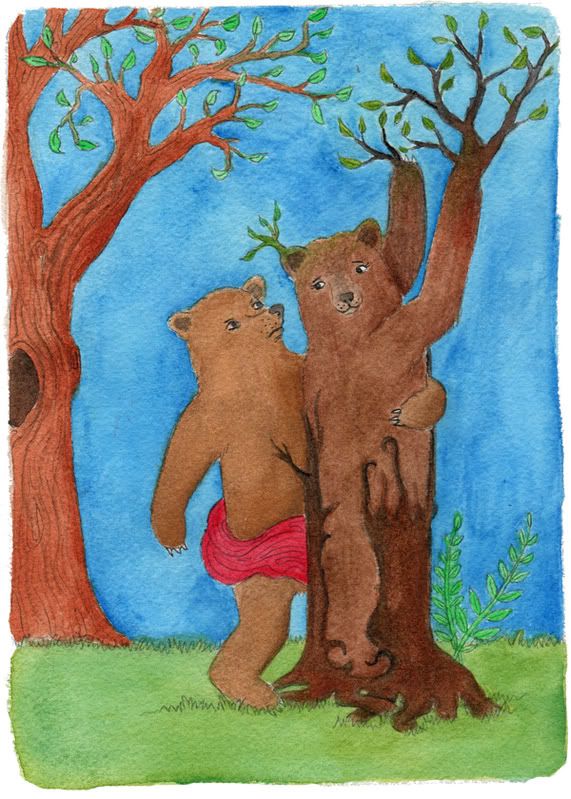
Mythology I

My take on the myth of Daphne and Apollo (in bear-vision):

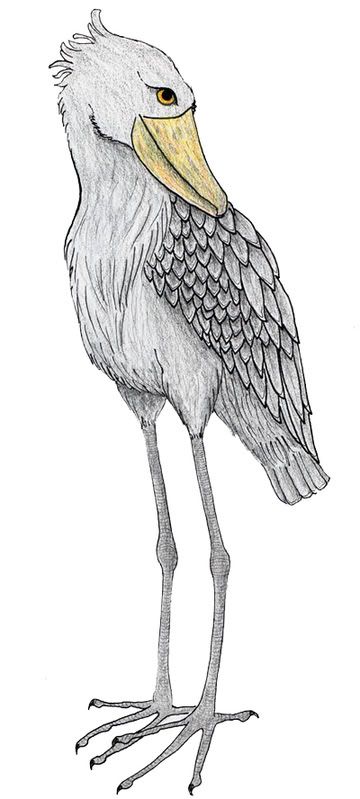
Shoebills, Savage and Otherwise

In the African wilds, Shoebills once roamed in nomadic tribes, hunting and gathering with great skill. The following illustration shows one of the remaining 'savage' Shoebills and is from a portfolio brought to England in 1860.


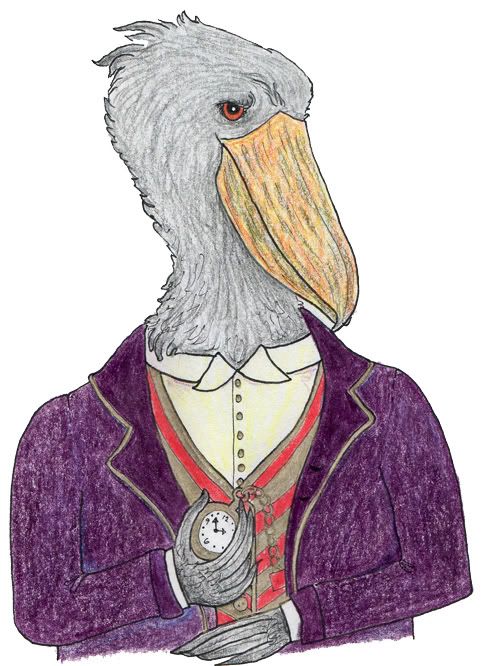
This drawing is from the collection of one Herbert S. Millivine, known for his extensive library that contained many rare artifacts relating to the ancient Shoebills' society. He added it to his collection in 1867 after finding it languishing in a London antique market, and often referred to the image as 'my dear ancestor'.

Herbert is pictured below in a photo taken sometime between 1867 and 1869.

Sunday, January 18, 2009

Seal-Folk


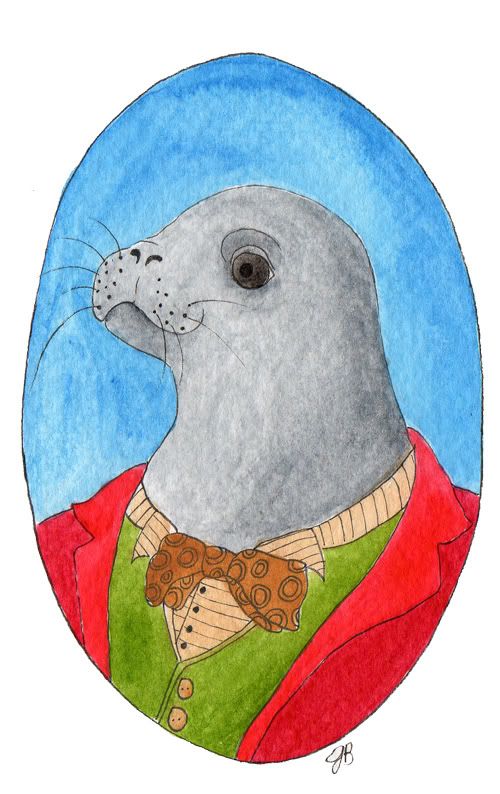
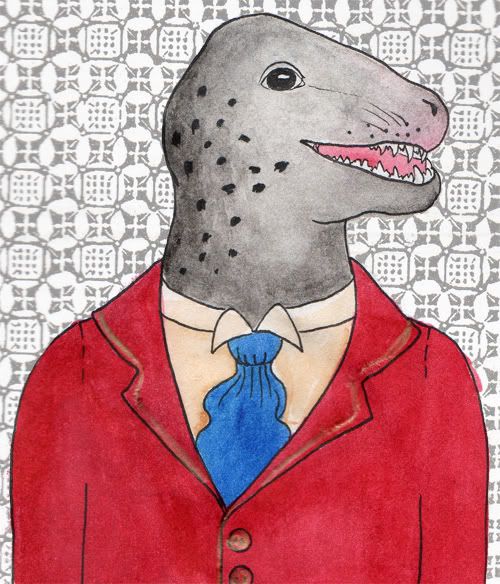
Stephan DeSotto, 1899

Known best for his rapier wit, which he developed in his teenage years to distract from his rapier teeth, Stephan was popular in the artist's cafés of Paris as he always had a clever insult ready for any newcomers who dared to show off their attempts at art. He tried desperately to overcome the existing prejudices that regarded leopard seals as nothing but bloodthirsty killers (of defenseless penguins, even), and managed to make great headway until the day he was discovered with the pocket watch of a penguin artist named Pierre who had recently gone missing.

It later turned out that Pierre had merely drunk too much absinthe and fallen into the river (and that Stephan had found the watch by the riverside), but by then the poor seal had left Paris in disgrace and it is reported that he spent the rest of his days drinking in smoky taverns in the South of France.


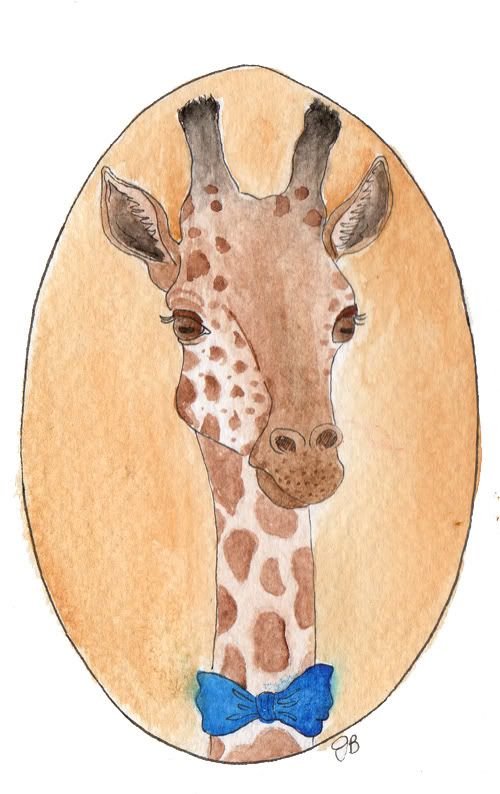
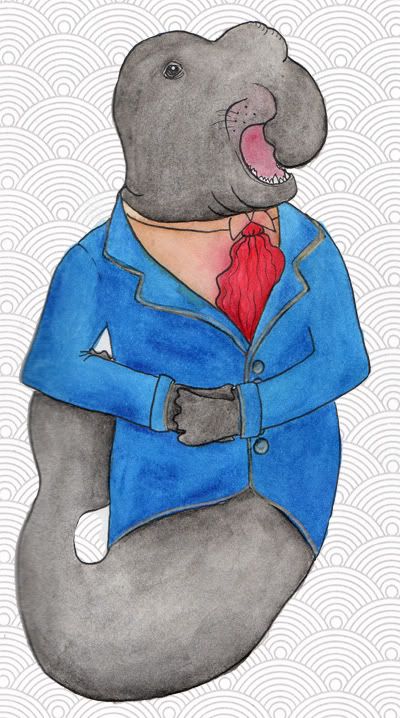
Clarence Warlington, 1822

Not nearly as famous as William Orpheus Harrington, Clarence was still considered one of the foremost opera singers in Europe. His rich tenor graced many a stage, and his first performance in London (where he played Alfredo Germont in La Traviata) drew one of the biggest crowds ever recorded.

Wednesday, January 7, 2009

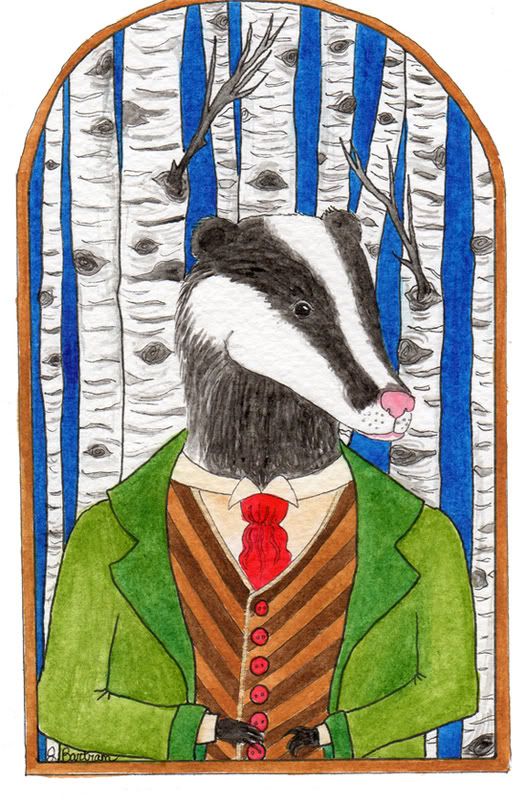
Orville Ainsworth - 1888


Orville Ainsworth was a quiet badger who enjoyed the countryside and spent the majority of his time in the Lake District, wandering through meadows and commenting on the slant of the daffodils when a breeze appeared. He was fond of saying he'd been friends with Wordsworth during the poet's twilight years, but few believed his claims, even when he retrieved a signed copy of Poems in Two Volumes.


(P.S: Look! I actually put in a background on this one! Exciting!)

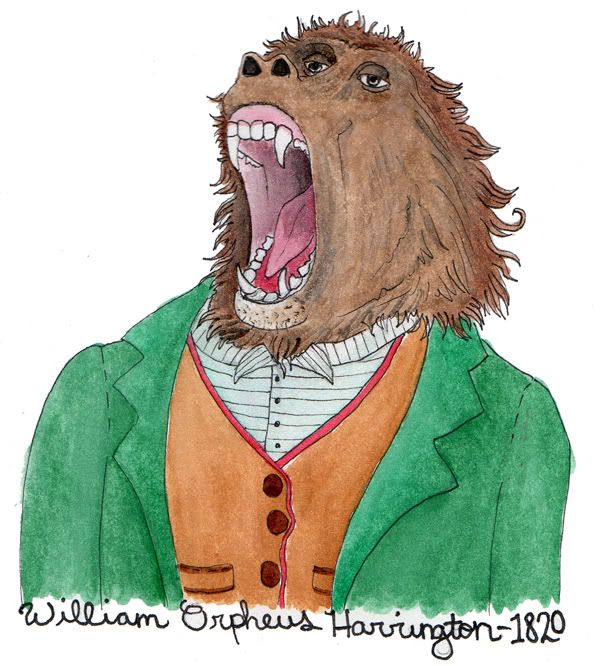
William Orpheus Harrington, 1820


A highly respected opera singer, William - known to the public as The Bariboon (on account of his deep voice) - traveled all over the European continent performing for nobility and packed houses in all the major cities (and a few minor ones as well). His rich baritone was unrivaled, and he shone onstage in such roles as Marcello in La Bohème and Papageno in The Magic Flute.

After retirement, William purchased a villa in Tuscany and lived there with a bevy of beautiful women, who he claimed to be training in the art of singing.

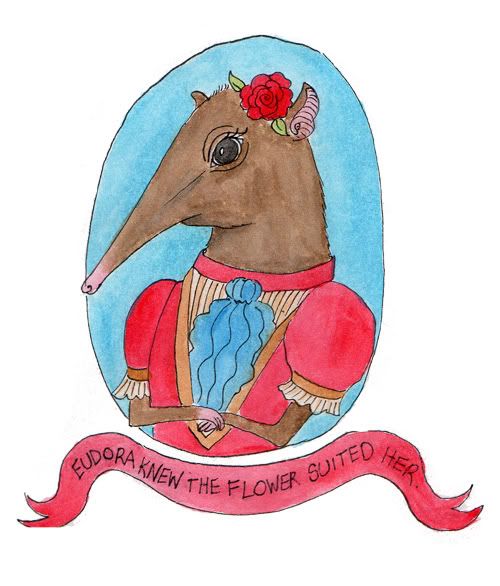
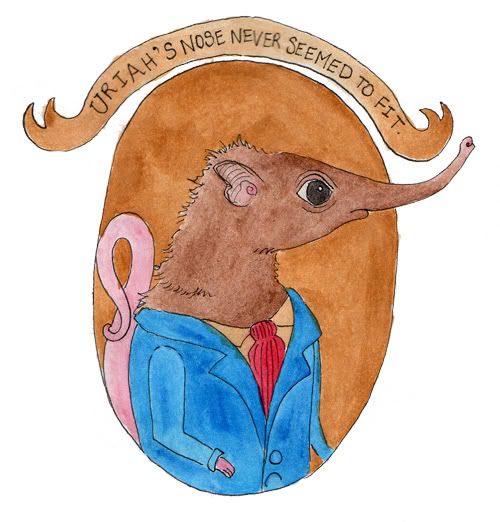
Uriah & Eudora


Elephant shrews may not be true shrews, but, like their shrewish cousins, are known for being hot tempered and quite flighty. It is a wonder, then, that this pair ever got together in the first place. Uriah met Eudora while working in a general store in northern New York State, and began to court her with ribbons, trinkets and flowers not long afterward.

Eudora was coquettish and feigned shyness for a few months, but was eventually won over by Uriah's gifts and his promises of a bright future to the west. Records show that the pair left New York in 1802, but after that no trace of them is to be found.