Wednesday, January 7, 2009

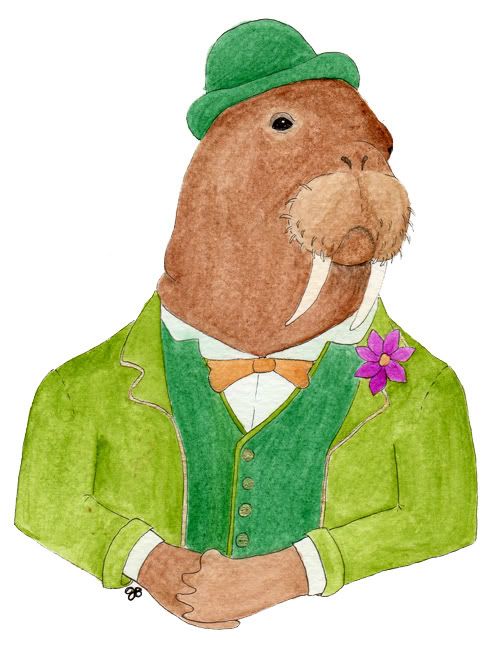
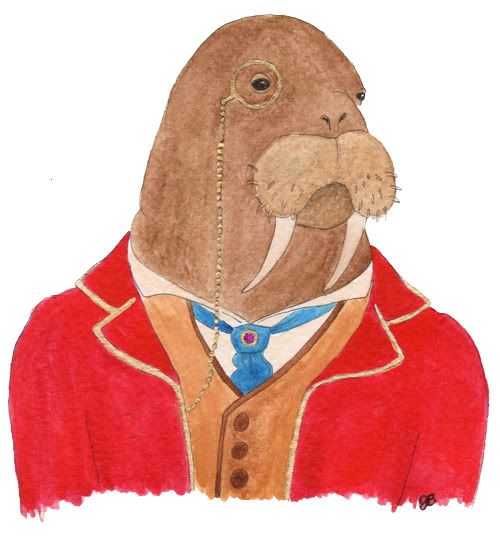
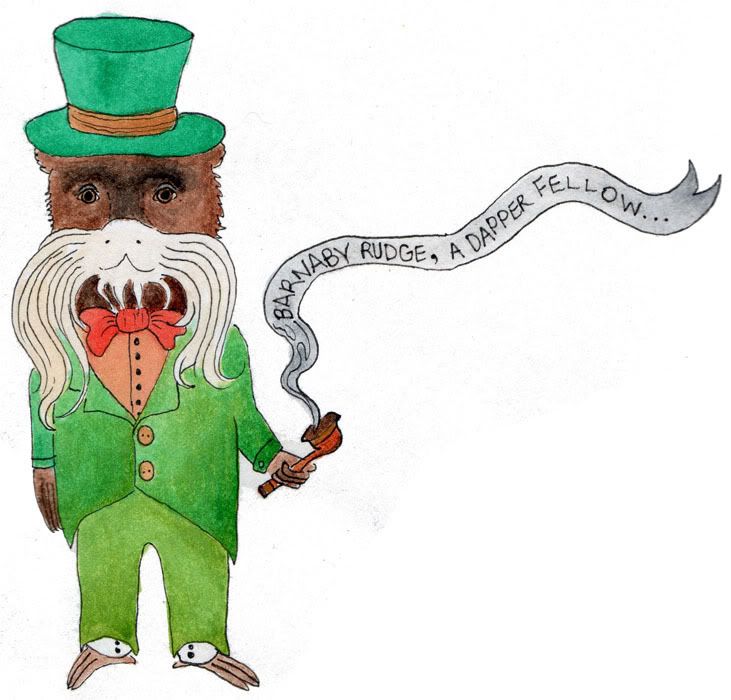
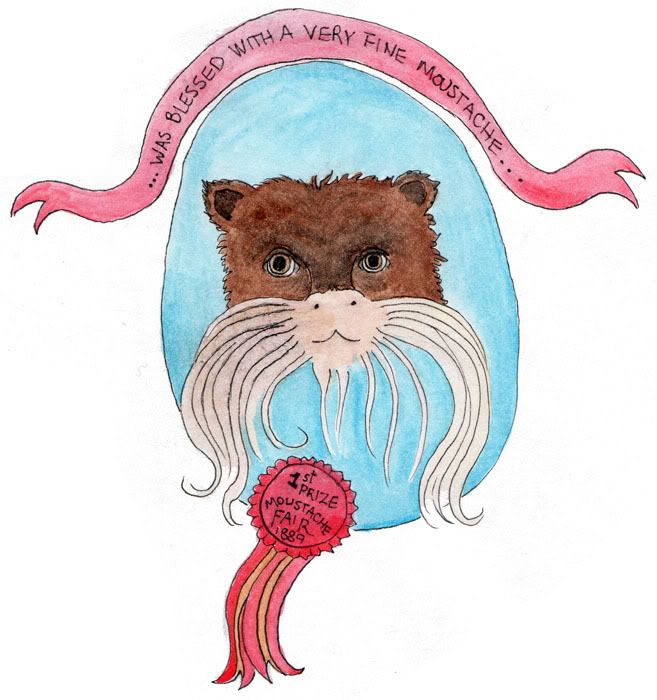
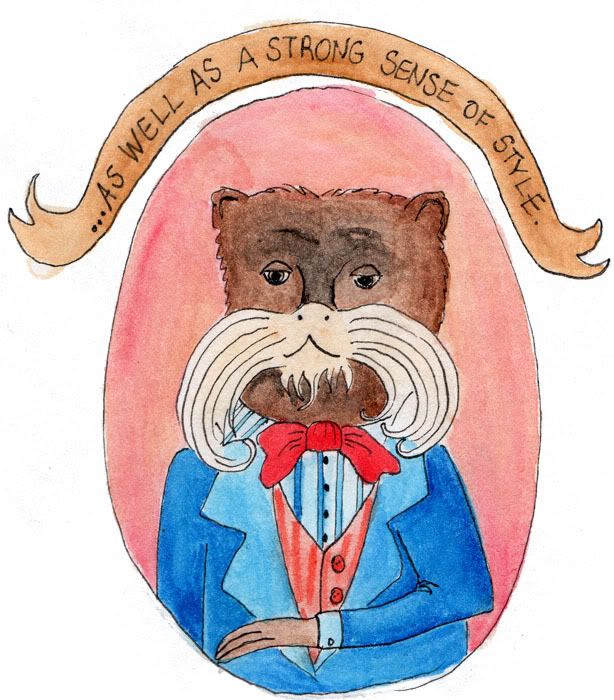
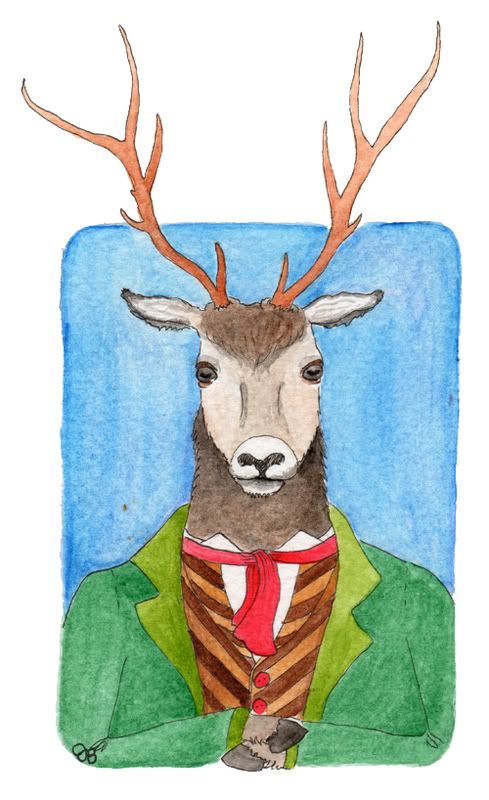
Olive & Charles Chevreuil, 1850


Charles Chevreuil

Descended from French nobility, Charles' ancestors escaped to England during the French Revolution, establishing a modest 200-acre estate just outside of Bath. Charles lived in England until the age of 18, when he decided to reject his father's wishes for his enrollment in law school and travel to Paris to live in drafty garrets and be a starving artist (something his father blamed on Henri Murger's Scènes de la Vie de Bohème, a book Charles had received from an eccentric aunt).

Once in Paris, Charles realized that most of the drafty garrets were already taken, so he ended up staying at a luxury hotel near Pont Neuf, where he met Olive Dupont and fell in love. The pair enjoyed a short courtship amongst the musicians and absinthe drinkers of Montmartre, then returned to England for their marriage.
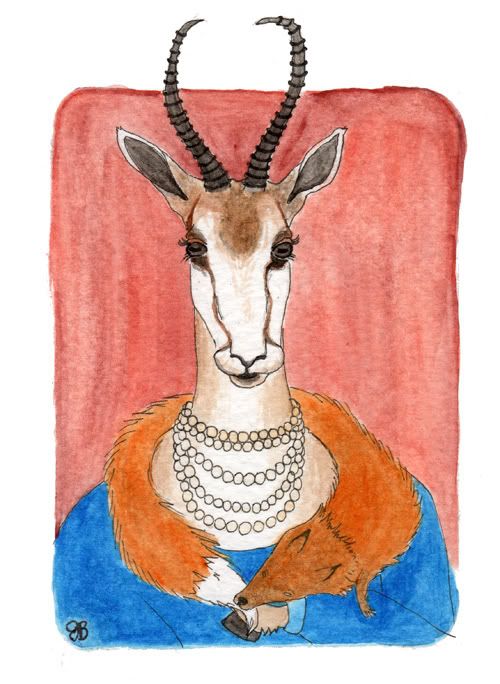

Olive Chevreuil

These portraits were taken in 1850 to mark the occasion of their fifth anniversary. By this time Charles' father had died, leaving him the Bath estate and a large fortune. He and Olive were known for throwing grand parties, to which Henrietta and Constance Daugney were often invited (though Olive would put her foot down every time they suggested guests put on a little play).

Tuesday, January 6, 2009

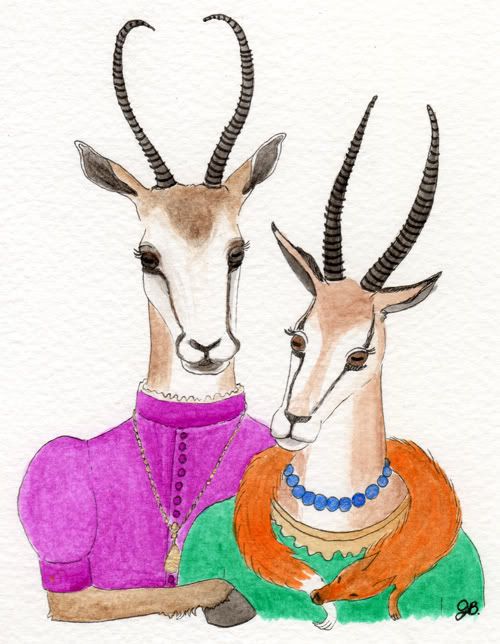
Henrietta & Constance Daugney, 1859


A Photo of Henrietta and Constance Daugney, 1859

Seldom have two otherwise nondescript sisters made such a mark on history. Henrietta and Constance shocked Victorian England by writing a series of adaptations of the texts of the Marquis de Sade for the London stage, which caused an uproar that lasted for nearly one year (1856-57). The pair was firm in declaring their playwriting efforts art, and attempted to secure one of the biggest theatres in London for their lavish production of Volume I of Aline et Valcour (arguably one of de Sade's tamer texts). The play never reached its opening night, being shut down by the authorities on grounds of morality, and the sisters retreated to the countryside, where they threw regular parties and had guests act out scenes from their censored opus.

Obediah Jones & Captain Wilfred, 1853


A Photo of Obediah Jones & Captain Wilfred, 1853

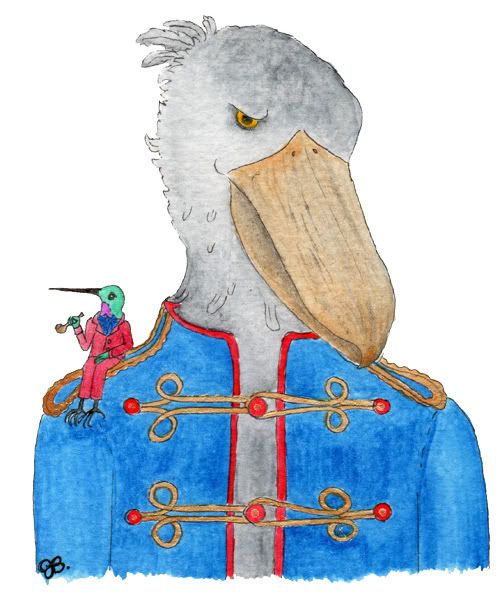
Taken in 1853 at Barnum's American Museum, this is a souvenir portrait of Obediah Jones, giant, and Captain Wilfred (a.k.a. Wilfred R. Snooder), midget.

The pair was one of the most popular exhibits in Barnum's museum, and thousands would attend their (thrice daily) demonstrations, mostly to ogle the shocking difference in size (but also to marvel at Wilfred's iridescent plumage).

Wilfred remained with Barnum's troupe until his untimely death in 1860 at the age of 40. Obediah quit not long after and moved out of New York City to live out the rest of his days in an exceptionally large house in the countryside.

Leander Whittington, 1839


A Photo of Leander Whittington, 1839

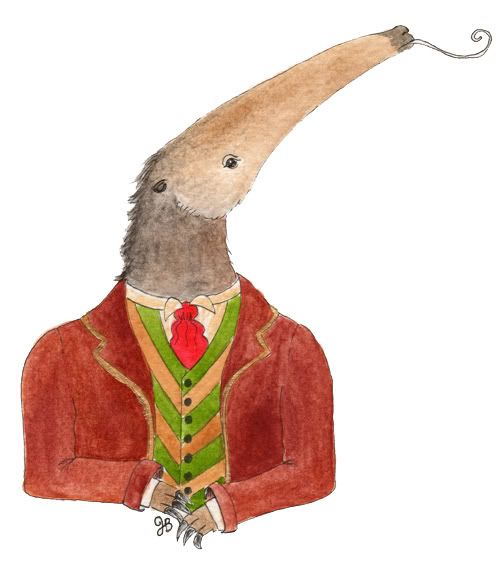
Leander Whittington, of the Dover Whittingtons, is best known as the first anteater to publish a volume of poetry in South East England (Edwina Ferley being the first in all the British Isles - her book, Reflections Upon Ants and Claws sold very well in London).

Titled Meditations on an Anthill by the Sea, Whittington's poetry collection is now found only on the shelves of the most dedicated collectors of anteater literature, and stands as a glorious proof of the golden age of English poetry.

The following is a small excerpt of the title poem:

O! Anthill by the sea!
How thy sandy sides glimmer
sitting in the wind's lee
and the ants that scurry
moving towards a form on the shore - a dead bee!

Sunday, January 4, 2009

In The Meantime...

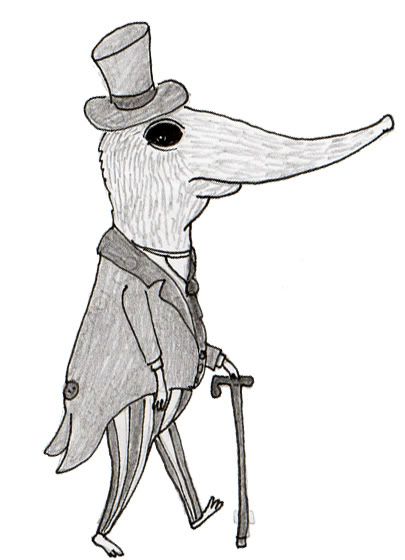
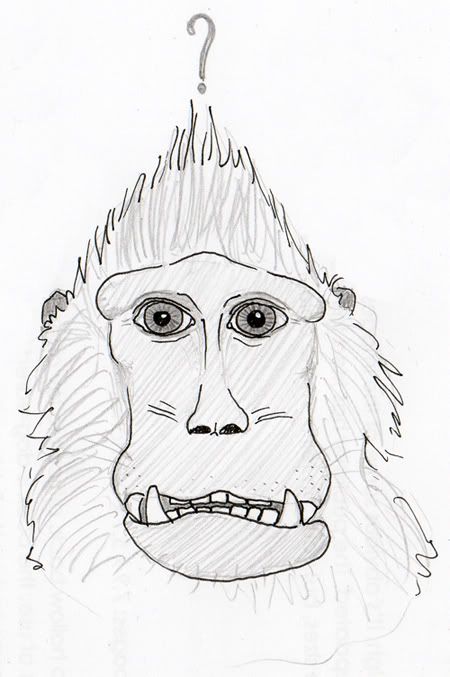
There will be a few more Victorian portraits coming (stories included), but in the meantime, here are a couple sketches I did while supposedly listening in a lecture (it's a bad habit, I know).

Here we have a slightly creepy elephant shrew...


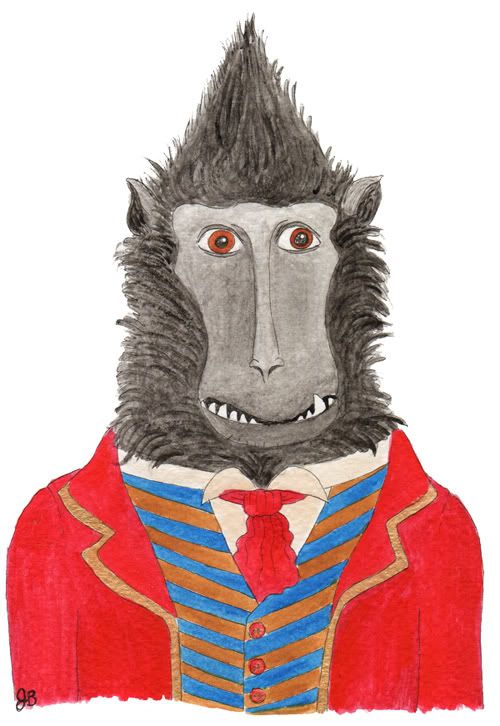
...and a quizzical monkey-dude!

Thursday, January 1, 2009

Josiah Nettlering, 1848


A Photo of Josiah Nettlering, 1848

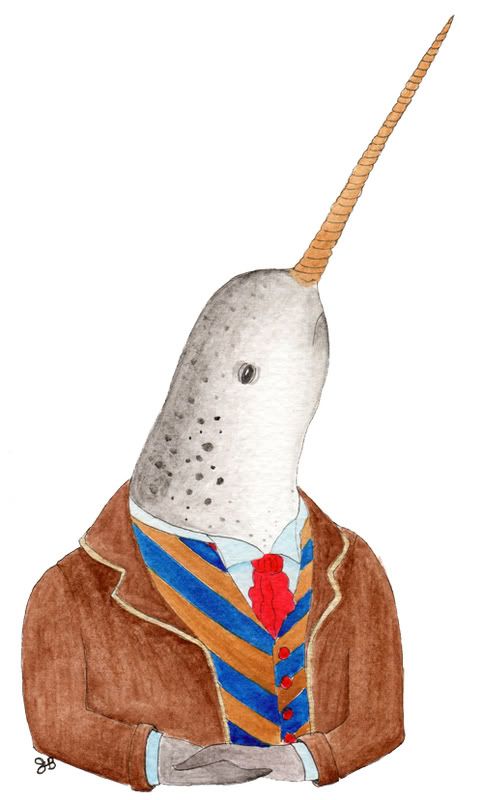
Always a dour child, Mr. Nettlering matured into a serious and business-minded Narwhal. He worked as head teller at the biggest bank in New York City and enjoyed the honour of 'least money unaccounted for' seventeen years in a row. Patrons of the bank became used to his stern attitude, and many found his steely glare and silk waistcoats oddly comforting. Mr. Nettlering died peacefully while counting money and a plaque, which can still be seen today, was erected in his honour.

Zebulon Rowatt, 1878


A Photo of Zebulon Rowatt, 1878

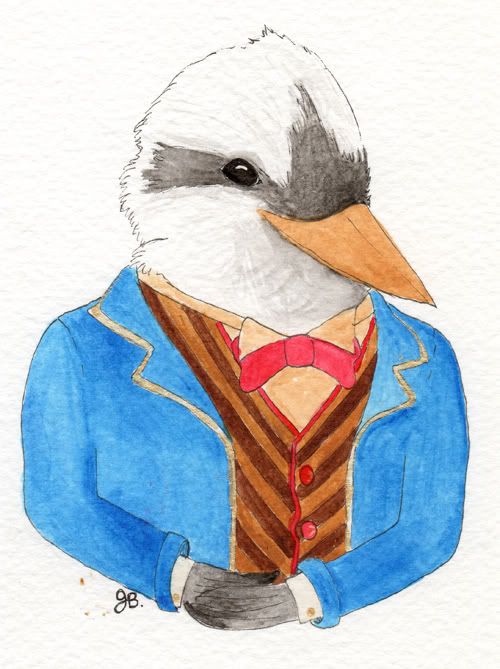
Mr. Rowatt is the only kookaburra to have run for office in England, and the first to fly solo to Australia. A great adventurer, Zebulon traveled most of Europe (enabled by his indulgent grandparents), and after his defeat in Cornwall, decided to leave the continent altogether. In news stories of the time, Zebulon is shown wearing his jaunty flying goggles, training for the exhausting journey that was to make him a celebrity in both England and Australia. This photo was taken one year before the historic flight and shows Zebulon wearing his favourite silk vest.

Bernard M. Cruickshank, 1860


A Photo of Bernard M. Cruickshank, 1860

A contemporary of Oscar Wilde, Bernard sadly never gained the fame or noteriaty of his rival. Never fully accepted in London society due to his flamboyant suits and intimidating tusks, the walrus would spend months on a play, only to have it be panned by critics as, "heavy-flippered," and, "broader than its creator." The cruelty of the critics finally drove Bernard out of London, and he spent the rest of his life touring the continent. It is reported that he visited Wilde on his deathbed, and that Wilde's famous last words were actually, "either this walrus goes or I do." (But sources remain wholly unreliable on that fact.)

And because everyone likes getting two walruses for the price of one:


Sir Cruickshank, 1810 - Bernard's disapproving father

Edwin Farthingale, 1845


A Photo of Edwin Farthingale, 1845

From what we gather from letters and a number of literary mentions, Edwin was an ape of many talents, most of them on the dastardly side. He is quoted in a popular novel of the time as saying to a lady, "frankly my dear, those gloves should be on my bedroom floor," which scandalized her to the point of swooning. This account cannot be verified, as the novel in question (The Trampled Lace Glove) is quite florid in style and takes liberties with most aspects of Victorian culture. We do know that Mr. Farthingale was thoroughly disowned by his grandfather for an unnamed deed and lived his life on gambling winnings (Edwin appears to have had quite the knack for cards, though he may have cheated with equal skill). This is one of the only existing portraits of an ape whose name was known throughout Victorian London.

Saturday, November 15, 2008

Barnaby Rudge

I've been a bit lax with my posting lately because this month has been all about writing (I'm foolishly attempting NaNoWriMo), so not much art has been made. But I can offer you a wee monkey I drew before the crazy writing started. Allow me to introduce...BARNABY RUDGE*!


*Yes, I know that's a name from Dickens. I didn't do it on purpose though - the moniker was just in my head, so I used it and found out later darn Charles had used it first. Curse him!